Wednesday, 15 May 2013

Strange Case of Dr. Jekyll and Mr. Hyde


Robert Louis Stevenson claimed that he got most of the inspiration for his writing from lucid dreams. Jekyll and Hyde came to him in a nightmare - his wife concerned at his fitful sleeping cries, woke him.  Disappointed he replied ‘'Why did you wake me? I was dreaming a fine bogey tale.' 

The book opens with Mr. Utterson, a prosecutor, who is friends with a friendly and scholarly man, Dr Jekyll. He has been hearing from various sources about the dastardly exploits around London of one Mr. Hyde. Hyde, gossip tells, had recently wantonly trampled over a girl in the street. Mr. Utterson is concerned as he knows that Jekyll has some kind of relationship with this fiendish Hyde. In fact, Jekyll has given Hyde unrestricted access to his house to come and goes as he pleases. Fearing his friend is under some dark influence, Utterson makes some enquiries. These become even more urgent when Mr. Hyde is believed to have brutally murdered an MP. Finally, Utterson discovers the truth in a letter from Jekyll. It explains that, with the aid of a ghoulish medical concoction, he has managed to split his personality into a good part and an evil part. However, now having run out of potion, he must remain permanently as the infamous and degenerate Hyde. 

My thoughts

This story is phenomenally well known. So much so that the main characters ‘Jekyll and Hyde’ are commonly used to describe anyone whose personality is somewhat changeable. Our cultural knowledge of Dr. Jekyll and Mr. Hyde is so strong that actually reading the thing feels like going back to your house and finding everything in a slightly different place. There is much less exciting dual personality, good vs. evil, action than you would expect from a book that typifies the genre. Even the title, ‘Strange Case of Dr Jekyll and Mr Hyde’ feels weird and wrong. 

Jekyll and Hyde is thought-provoking though. To an extent, living in society necessitates suppressing our basest urges. You could think of it like a clown’s balloon. As we squeeze one part of our personality into an acceptable shape, all that energy just pops up somewhere else. I think it’s also quite familiar to feel a distinct shift between modes. We talk of ‘bottling things up’ and then letting them go, or ‘blowing up’. And we notice this in our friends too. Part of the reason I think Jekyll and Hyde is so well known, is it speaks to the truth of this. People often do seem to have different sides to their personality, and this novella is the archetypal narrative of this.

Stories help us understand the world around us. They give us a structure to events. From religious stories to fairy tales and fables each contains pinches of reality, triple distilled down to its very essence. Jekyll and Hyde, then, describes something quite fundamental in the human experience. I think it was the first story to capture  our changeable nature in a way that resonates with the world we live in.

Welcome to the dark side

Whilst Jekyll and Hyde is an exemplar story, I think its morality is quite subversive - and very different - to that of our times. I see it as a deeply and fundamentally a Christian narrative - which is odd because Louis Stevenson rejected Christianity. To me the basic moral takeaway is: don’t dabble with your dark-side, because it will consume you. The plot condensed into one sentence would  be: Jekyll releases some of his inner base urges, finds he can’t control them and get stuck as his shadow self.

Some say that, actually, Dr. Jekyll went too far in suppressing his animalistic urges - when he released the valve it came out like an explosion. But I don’t think that really makes sense. Mr. Hyde is far darker than Dr. Jekyll is good. Jekyll is, if anything, a normal member of society, not some bastion of saintliness. He isn’t helping old ladies cross the street or donating his money to orphan children. In fact he dabbles in a dark laboratory dissecting animals, and says that although he tries hard to be pure he continually experiences dark urges. Hyde, on the other hand, is a murderous thug, almost sub-human in his capacity for evil and lack of regard for social norms.

So to me, the story wants to tell us that in every human there is a bottomless pit of evil which can’t be allowed out without devastating consequences. That sounds very evangelical. Taking one more small step of conjecture, it almost seems that Louis Stevenson took on board all of the teachings of Christianity about the nature of humanity, and rejected just the spirituality. By doing so, perhaps he felt forced into taking the pessimistic view that there was then nothing we could do to control the animal inside all of us. Stevenson even appears to have lived a little of the libertine lifestyle too. 

By my reading, Jekyll and Hyde isn’t really an exploration of good and evil, it is really just a study of the evil - the animal - inside of us.

The last word

Jekyll and Hyde is a short little book - worth a read if you've got an hour to kill. What more could you ask for? It’s a little gripping Victorian horror that explores the consequences of living a double life, but more importantly it’s a good look at the philosophy of what it is to be human.

Wednesday, 8 May 2013

Wuthering Heights (Emily Brontë)


"The action takes place in Hell, but the places, I don’t know why, have English names”  Jorge Luis Borges

I didn’t know much about Wuthering Heights before I started reading it, but I had a vague hunch that it was some kind of society romance. I've since talked to some of my friends about it, and they all think the same thing. I had also lumped it into one of a huge pile of books in the category ‘maybe I’ll get round to it one day’. I don't know how Wuthering Heights got this kind of dull reputation, but it is utterly misplaced. This novel is full of savage, Gothic horror that is cunningly disguised amongst the routines of provincial banality.


The novel starts with Heathcliff, a boy found on the moors and taken in by a father of a young family. Heathcliffe grows up, favoured by the father but despised by the rest of the family except the daughter, Catherine. The two of them have a deep affinity and go for madcap rambles on the windswept and rainy moors. Catherine marries a bland boy, Edgar, and later dies. But Heathcliff's love lives on, deep as an ocean, bending him into a cruel and brutal revenge of Catherine's husbands family and everyone he knows.

“Be with me always - take any form - drive me mad! only do not leave me in this abyss, where I cannot find you! Oh, God! it is unutterable! I can not live without my life! I can not live without my soul!”

My thoughts

This novel really is savage. In the first chapter the narrator visits Heathcliff, the novel’s main character. As he walks into the house, dogs attack him and push him to the ground. They ferociously nash at his face and arms. Heathcliff, seeing this, looks on and laughs at the blood streaming from his visitors face. This is shocking stuff. Here I was, starting a Victorian ‘romance’ novel where passions are normally kept hidden and under the table, and, in the first chapter, there is explicit and feral violence. Very quickly, this engendered in me an intense feeling of claustrophobia and unease.  I wanted to get out of this devilish house where such human shadows lurk, casually hinting at the darkness inside us all.

Reading Wuthering Heights was quite an uncomfortable experience - Emily Bronte is describing emotions powerful enough to break a human. But I loved the parts where Catherine runs away to the moor. It seemed to me to be representative of the wildness in us all. Stories really give us a narrative structure to understand our own lives - almost like lenses with different tints and perspectives, they hone the glasses through which we see the world.  Catherine breaking free, and running away to the wild moorland of moss and brackish pools of water feels to me deeply symbolic. Twisted, troubled child she is, but who wouldn’t follow her onto the freedom of the moor?

Wednesday, 1 May 2013

If on a Winter's Night a Traveller (Italo Calvino)


If on a Winter’s Night a Traveller is one of the more imaginative books I have read. Like a car full of clowns, it’s packed full of wackiness just bursting to get out and make you smile.

This book’s hero is you, the reader. The first chapter describes your attempts to get comfortable and concentrate on this new book you’ve just bought. And then, in the second chapter, the novel begins. It seems like an engaging story, perhaps a thriller, a spy story with hints of espionage. You’re hooked. But then - the third chapter explains - there is a printing error and the part of the book you’ve read is just repeated over and over again. Oh no! You go to the bookshop to try and purchase an error-free version. You end up picking up a pretty girl and a new copy which, in the fourth chapter, you begin to read. But it soon becomes clear that this is not the same story at all... You read on anyway. It is about two people who are about to completely switch lives. How intriguing. And there’s a girl involved. She causes the two main characters to get into a dramatic fight. You’re hooked! But the reading experience is frustrated, and - again - it is possible to get no further than the end of the first chapter.

In fact, every even chapter of Winter’s Night is the first chapter of a new novel. And every odd chapter covers the main story-arc that explains why you are starting all these damn books. This story-arc takes you - the hero - on a wild caper around the world, there’s international book smuggling, rouge-translators, censorious dictators and even space for a little bit of a love.

My thoughts

Winter’s Night brought to my mind At Swim Two Birds, Tristram Shandy, Paul Auster, Nabokov, Borges, and the Eyre Affair. I would file this under inter-textual meta-fiction, and I have a bit of a soft-spot for the genre.

That said, I found reading this novel slightly numbing. Every time I got to a new opening chapter, I would sigh, look up and want to put the book down. That’s because it takes a bit of effort to start reading a new book; you have to learn about a new world and a whole new set of characters. And it would be easy to resent that effort, if there wasn’t a return on your investment. And there just isn’t in this book. Ultimately, since the opening chapters don’t ever go anywhere, it felt slightly pointless reading them. I knew that I was going to be left hanging and disappointed, so I didn’t emotionally invest in any of the characters.

That meant that I found ‘a book of first chapters’ a bit of a gimmick. It’s a really neat idea, but it actually got in the way of telling a good story. Perhaps I would have enjoyed it more if Calvino had in some way wrapped up the myriad of stories he started. But I understand that would have defeated the purpose.

I felt the same way about the main character. When I first opened the book, and saw that it was all about ‘you, the reader’, I got a real rush of delight. ‘That’s me!’ I thought.  But that feeling wore off pretty quickly. Obviously I wasn’t doing any of the things that the book described, so ‘You’ stopped being ‘me’ and simply became just the name of the book’s main character. Again, it felt slightly gimmicky because, although it’s a brilliant idea, keeping it up for the whole book seemed redundant - and even detrimental - to my enjoyment.   

One more thing, the story arc didn’t stick as close as I would have liked to coherence. Great novels can have whacky things happen, and great writing can be written hazily and ambiguously as though looking through a smoke-filled room. But I think Winter’s Night tries to do both of those things in the same novel, and I’m not sure they go. To me, it started to feel like absolutely anything could happen, but it just didn’t matter because none of it was real.

I did like this book. I really did. There was a breathtaking amount of originality in there. And Calvino is clearly a phenomenal writer. Perhaps my reservations just come down to my philosophy of reading. I like books that contain truths about human nature, that deepen my understanding or sharpen my emotions. Calvino offers a more aesthetic enjoyment -  reading as pleasure for it’s own sake, not to get anywhere (even to the end of the book) but simply to enjoy the cleverness, and quality of the writing. It’s the kind of pleasure you get from dipping your toes in a cool mountain stream, feeling the water flow gently over them.

If you like this book, I think you will very much like two novels by Flann O’Brien - At Swim Two Birds, and The Third Policeman. To my eyes they were similar - exceedingly well written, and lots of fun - but even more imaginative, inventive(!) and crazy than If On a Winter’s Night a Traveller.

In fewer words

This book is a little bit bonkers, and it’s bursting at the seams with the sizzling crackle of a technicolour imagination. This book isn’t just in 3D - it’s in 7D! Yeah, that doesn’t make any sense. Neither does the book. But it will overwhelm your senses, and come at you from every direction. And the hero of it all, is you.


Wednesday, 24 April 2013

In Search of Lost Time (Swann's Way - Volume 1)


Having read Swann’s Way, clocking in at a mere 500 pages, I have finished only a seventh of this great behemoth of a novel (the longest novel ever written). I’m happy though. This book was such a joyful ride, that it is very exciting to have gallons of book left in the tank.

 In Search of Lost Time is largely told by a narrator who recounts his earliest memories (including the famous episode of the madeleine). The biggest chunk of Swann's Way, though, tells a deconstructed love-story that happens before the narrator is even born. 

Swann, a society man with brilliant connections, inexplicably falls in love with a girl that he is scarcely even attracted to. It starts with a Parisian social group that deliberately sets itself apart from the rest of high society, declaring them bores and demanding the slavish obedience of its members. Odette, a beautiful women who happens to be part of this set, pursues Swann, who, although repelled, feels he has to humour her advances. Somehow he falls in love with her. Almost as soon as this happens, she starts to pull away from him, which fuels a growing obsession. This withdrawal is vividly portrayed, and we learn about what is happening purely from a description of Swann’s changing feelings. Eventually it is revealed that she is a fallen women, and completely unsuitable for a man like Swann, but by this time, he is snared.

My thoughts

For me, the best part about reading is finishing a paragraph and thinking ‘Yes! That’s exactly how I feel, but before now I didn’t even know it’. In that moment, you learn something about yourself, but it also creates a joyful feeling of being at one with the human race. Suddenly you’re not some weirdo for having those kind of feelings, instead, you realise, everyone does! Often the things that people think are the most private are the most universal, and great literature lets you constantly discover this. My favourite books are full of these kind of moments. Tolstoy, for example, really sees the the little things that make up a life.

Just a quick related aside. I write all over my books. I underline, scribble, make notes, highlight and sometimes even doodle. To some people that’s sacrilegious, aren’t I ruining them? I don’t think so. I underline the parts that change my life, the sentences that give me that rush I just described. This means that my books are personalised to me; I’ve changed them, moulded them, made them mine. I find it really difficult not to. Say, for example, I buy a book that costs ten pounds, and a page of it changes my life, well to me that’s invaluable so I’m damn well going to underline it with a big red felt-tip pen.

I say all this for context, because Swann’s Way is my most ever underlined book. It is simply bursting at the seams with sparks of hidden truth. Every page, every sentence in Swann’s way shimmers with those 'Yes!' moments . I’m serious. I literally read this book going Yes! Yes! Exactly! Yes! and furiously underlining almost everything in it. Whilst the resale value of my copy has plummeted, I’m excited to read and underline the rest of the novel. It also led me to a lovely thought, perhaps this book is Proust’s annotation on real life. Maybe Proust looked at his world, and - like me reading his work -  wanted to underline *everything*. Well, In Search of Lost Time was him doing just that.

Life +

I learnt so much from Swann’s Way, that I think no other book could compare. It has to be the best novel to gain micro-understandings of how people think, and for seeing what other people’s inside worlds might look like.

One thing that stood out for me is the meta-lesson of obsession in Swann’s Way. The things we want, we want because of the context not the content. Actually the content of the things we desire is changeable, vapid and meaningless. Maybe it’s a flat-screen TV today, a new bike tomorrow, fame or a pretty girl. The thing that is driving our wants is not the thing itself, it is the surroundings - the peer pressure, the advertising and the methods they employ. There are troupes of people in our world who are quite cynically employed to manipulate our desires using all the techniques that Proust exposes.

A Reader's Guide

If reading Swann’s Way is challenging - and I’d argue that it isn’t - it’s worth it because it has really great return on investment. What you get back from this is so much more than you put in.

In reading it, I seem to remember a section of about 50 pages at the start of the third part which I found a little bit dull - the narrator goes through a list of place names and the association they trigger in his mind. There were also a couple of segments, perhaps 25 pages each, which were taken up with a description of random characters that hadn’t been previously introduced talking in a party. Other than those small sections, I found the whole of the rest just brimming with joy.

In Fewer Words

Swann’s Way puts you firmly behind the eyes and into the mind of its characters. And so completely will you borrow their thoughts, feelings, and passion, that they become entangled with your own. This isn’t just a good book. It’s hard to define, sublime and infinitely underlineable; but ultimately, Swann’s Way is nothing short of a walking tour for the human mind.

Wednesday, 17 April 2013

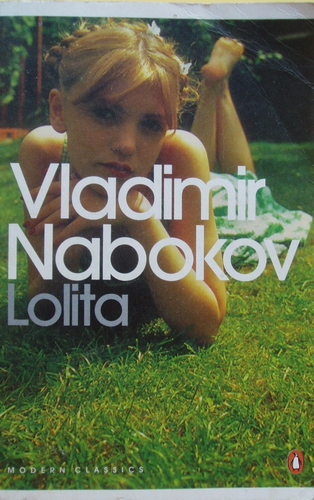
Lolita - Vladimir Nabokov


I have no idea why this novel was written. It is the most beautiful book; the language, the word-play, the finely-tuned emotional resonance, but, like a mouldy orange, it's written around a rotting core...

“Lolita, light of my life, fire of my loins. My sin, my soul. Lo-lee-ta: the tip of the tongue taking a trip of three steps down the palate to tap, at three, on the teeth. Lo. Lee. Ta. She was Lo, plain Lo, in the morning, standing four feet ten in one sock. She was Lola in slacks. She was Dolly at school. She was Dolores on the dotted line. But in my arms she was always Lolita.”

The central theme of this book is deliberately shocking. A man - our narrator, Humbert Humbert - is obsessed with girls, nymphets as he terms them, under the age of 14. He lodges in a house, and becomes infatuated with the landlord’s 12 year old child, Lolita. He then marries the mother who promptly discovers his shameful secret and, by coincidence, dies immediately afterwards. Humbert takes off on a two year ’joy-ride' with the Lolita (now his step-daughter). Soon, they notice they are being followed; creepy events start to occur with increasing regularity, and their sick but stable world begins to unravel.

Reading Lolita is, quite profoundly, a disturbing experience. Our narrator describes his deviant interactions with a child as though the two of them were in a (consummated) adult relationship. He tells us that Lolita is playing games with him, leading him on, teasing him, flirting with him. As a reader, I had to constantly force myself to remember that the object of his affections is twelve, and that the narrator - monstrously - is not reliable.


My thoughts


Reading this novel, I sometimes felt like throwing the book down and yelling ‘why was this written?’.This is not a question with which Nabokov had much sympathy. Sardonically, he writes:

‘Besides the lambs who read [Lolita].. in a spirit of ‘why did he have  to write it?’ or ‘why should I read about maniacs, there has been a number of wise [people]’

I think ‘Why’ is an important question to ask though. And the more I think about Lolita, the more I consider it donut shaped. There is a lot there, but nothing in the centre; no morals to bind it all together, no deeper purpose, no crusade, no point even. It just is. And that's quite difficult to accept.

Nabokov's genius was writing a horned-melon of a book. One that is so breathtakingly good that it must be read, and yet the reading of it will torture you. It will give you glimpses of true beauty, and yet - wantonly - prickle and probe with no desire to leave you a better person.

And that barbed, spiny, nettlesome nature runs down deep into the book’s veins. Because it’s impossible to be shocked continuously for 400 pages. The gritty reality of what is being described leaves you anesthetised and numb. As a reader - just by reading - you tacitly accept Humbert’s behaviour. Worse, we’re all complicit in it, by, as Anthony Burgess termed it ‘nodding scandalised assent’ to Humbert’s crimes.

Lolita almost seems to use the propaganda technique of the Big Lie. By repeatedly framing the the interaction between a 40 year old man and his 12 year stepdaughter as a relationship - when it isn’t that at all - the reader cannot help but think inside that frame. And that’s a scary commentary on the human capacity for acceptance. But also a reason for questioning the author’s motivations.
Because again and again, my mind returns to why. Nabokov felt strongly that he didn’t have to justify why he wrote Lolita, and he claimed that ‘Lolita has no moral in tow’. I disagree. Nabokov doesn’t just touch on taboo behaviour, he has written a book which - on the surface - provides a justification, an excuse even, for horrendous crimes. I think it is obvious that the book does not attempt to provide that justification, but that doesn’t relieve the pressing and unanswered question. Why?.

Life +


Lolita opened my mind to the beauty of language. Nabokov’s writing is quite simply stunning. Not only did I learn lots of new words reading it (crepitate, for example), but I’ve also never seen writing like it. Nabokov makes the words on the page bend precisely to his will. If you want to write, I don’t think you can afford to miss seeing what this author can do. It is almost like a super-power.

I think I took away something about real life too. Humbert's main characteristic is his lack of accountability. Throughout the whole novel, he’s happy to take responsibility for his actions - calling himself a monster etc. - but he sees these actions as inevitable and uncontrollable. He commits the gravest sins without any attempt to stifle his inner demons. We never see him wrestle with himself, still less manage to exercise self-control.

Humbert acts as if a poet’s mind was taped to a robot body. The poet watches and soliloquizes, and writes beautiful expressive words about the actions of this robot. A robot that is programmed to act like a monster and, Humbert feels, completely outside the sphere of his control. In this sense, he is a caricature, most of us don’t abandon our free will so freely, and most don’t have urges so dark. But part of the reason reading Lolita causes us such pangs, is because that same faculty is in us all. We all spend most of the time looking down, watching ourselves acting out our lives. Perhaps we need to wake up.


In fewer words

Prickly, disturbing and energetically amoral, Lolita is a wild trip, a great read, a vibrant splash of colour, and a fizzling fire-work of great writing. One thing’s for sure, as soon as you open the front page, Lolita will reach into your guts and pull you on a madcap rush to places that you don’t want to go. It’s a mouldering orange, a horned melon, an exploration of beauty, and a declaration of perpetual decay. It simply aches to be read; after all, the rest is rust and stardust.


***

You can get Lolita here.

Friday, 12 April 2013

The Top Eight Plot Holes in the Hound of the Baskervilles


I loved reading Hound of the Baskervilles, but I think the plot is as holey as Emmental cheese (or Pope Francis to coin a pun).  I don't think these plot-holes really take away from how fun the book is. Sherlock Holmes stories suspend your disbelief, and clearly they are not meant to be realistic. Pointing that out might be as obvious as the classic newspaper headline - Teen Pregnancy Drops Off  Significantly After Age 25 - but, just for fun, here are the top eight plot holes in the Hound of the Baskervilles.

This post assumes you’ve read it, so will contain many spoilers. You can check out my review here.


1. The old Baronet Baskerville dies of fright when Stapleton, the murderer, sets a dog on him. But could Stapleton really count on killing the old Baronet ‘of fright’? The hound chased after him, but what if he simply hadn’t died? Sherlock describes this as a ‘flash of genius’, but surely, at the very best, it is quite a flimsy plan.

2. Apparently, the only way Stapleton could get the old Baronet out of the house (in order to frighten him with the dog) was through an incredibly convoluted process. First, he pretends that his wife is his sister. Then he courts a girl in a neighbouring town, making her fall in love with him. He then asks her to write the Baronet a note asking him to meet her by a fence at night. It’s slightly far-fetched, and couldn’t he just have forged the note himself? But more pressingly, if he was bent on murder using 'frightened by a big dog' as the murder weapon, couldn't he simply have released it into the mansion?

3. In the final scene, Stapleton - hoping to dispose of Henry Baskerville - releases the hound on him as he walks home through the moor. But what was he hoping was going to happen? This young man wouldn’t die of fright like the old Baronet.  Sherlock answers this question with a hand-wave, perhaps the dog was hungry and would eat him. 

That seems unlikely, but it also begs the question, why on earth did Stapleton daub the dog in phosphorous and paint for Henry?  He used that to foster the demonic dog myth - but since Henry wouldn't die of fright, what was he hoping was going to happen?

4. Henry Baskerville walks home in the final scene when he is attacked by the hound. Sherlock has to rescue him with a revolver. But why didn't Henry simply carry a revolver himself? The only assistance that Watson and Holmes provided was to shoot the dog. In fact, if Henry Baskerville had just carried a gun around with him, Sherlock Holmes need not have bothered with the case at all.

5. Most dammingly of all, what was Stapleton hoping would happen after killing the two Baronets? He was - secretly - a Baskerville, but had long called himself Stapleton. Presumably he kept the false name so that no one would guess he had a motive for murdering the two Baskervilles. But, clearly, he would have to change his name to eventually claim the fortune, at which point he would reveal his motive. 

Sherlock speculates that perhaps he would go to South America afterwards and tie everything up there. That is pretty weak. So the plan is 1) Kill all the Baskervilles 2) Go to South America 3)??? 4) Profit!

6. Why did Stapleton pretend his wife was his sister? It seemed to serve only the most tenuous purpose, but how in the world could he have known that he needed to make a girl fall in love with him in order to get her to send a note to the Baronet before he came to Devon? The answer - he couldn't.

7. From Wikipedia: Dr Mortimer is an expert on phrenology, heredity and reversion, yet didn't spot that Stapleton resembles the portrait of Hugo Baskerville

8. Lastly, if everyone kept hearing a big howling dog on the moor, and a big dog’s foot-print turned up at the scene of the first murder, why didn’t someone just go look for it? I simply don't understand why everyone would have assumed it was a myth or a demonic ghost. If someone hears a dog howling - especially Sherlock Holmes, the bastion of rationality -  then the most likely explanation is that there is a dog near by. 

***

You can buy Hound of the Baskervilles here

Alternatively, this book looks quite fun. It's called:  Sherlock Holmes was wrong, reopening the case of the Hound of the Baskervilles


Wednesday, 10 April 2013

Hound of the Baskervilles

File:Cover (Hound of Baskervilles, 1902).jpg
What a gripping little chocolate of a book! This twisty, turny, installment of Conan Doyle’s famous detective series tastes like the real stuff.


“I tell you, Watson, this time we have got a foeman who is worthy of our steel.”

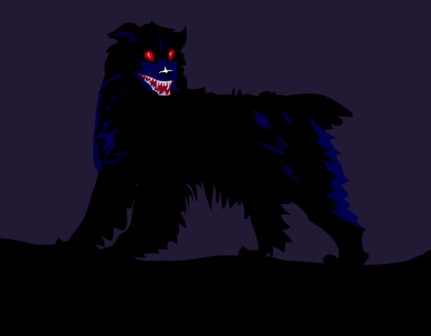
Hound of the Baskervilles tells the tale of an old Baronet who dies in strange circumstances outside his mansion deep in the heart of Dartmoor. The townsfolk whisper about a revival of an old family curse - a ghostly, devilsome hound that stalks the moors. Alarmingly, this might not be just idle talk. Next to the dead man, a footprint was found that looks horribly like that of a gigantic hound.

Sherlock Holmes is called in, and finds this case a tough nut to crack. The old Baronets heir - Henry, his nephew - goes to inhabit the creepy manor, along with Dr. Watson - Holmes eager sidekick - and we soon come across layer upon layer of delicious caramelly mystery wrapped around that nutty centre.

My thoughts

I enjoyed this book on two levels. On the first, it is a rather gripping detective story. It seems so completely modern and yet utterly familiar. I had never read Sherlock Holmes before, but reading it was instantly like putting on an old, comfortable pair of jeans - or those trainers with holes at the back of cupboard that hug your feet like slippers. And on the second level, I enjoyed seeing how the book conducted the tension in my own mind. It was almost symphonic, now rising and falling in different tones and pitches, building towards it’s gripping finale.

The description is constantly evocative too - the words merely passed across my eyes, diaphanous, as I saw behind, lucidly, Doyle’s dark, and windswept moor. For me, reading Hound of the Baskervilles was a bit like watching TV, someone reading to me and eating a chocolate all at the same time.

“It is murder, Watson—refined, cold-blooded, deliberate murder.”

I recommend you read this book by surfing along the current of the plot, enjoying it intensely, and living in the scenes it creates. But don’t for one second stop and think about it. You’ll drown in plot holes! Every moment my mind spent analysing the plot, I seemed to be dragged down further into a bog worthy of Doyle’s fictional Great Grimpen Mire. Just for fun, on Friday I’ll go through the top eight plot holes in Hound of the Baskervilles.

Read it, live it, love it - but try not to think about it!

***

You can buy Hound of the Baskervilles here