Showing posts with label Classics. Show all posts

Wednesday, 10 July 2013

Gulliver's Travels (Jonathan Swift)

This is one of the best things I have ever read. It is almost a cliche now to describe Gulliver’s Travels as a biting satire, but it is utterly true - and a wonderful one to boot. In a shortened, picture form, Gulliver’s Travels is one of the world’s most popular children’s book so the plot feels familiar and almost nostalgic. Along with rice cakes and marmite sandwiches, reading it took me back to my childhood. Suddenly I was eight again and running around the playground.

The story goes a bit like this. Gulliver leaves his wife and child to go travelling, and from then on has a set of the weirdest, most fantastical adventures ever set to paper. Shortly after leaving, Gulliver shipwrecks and stumbles upon Lilliput, the renowned land of little people that can walk around on his hand. After the ensuing adventures and a journey home, Gulliver embarks on a further bold voyage, but this time his ship flounders on Brobdingnag, a nation of giants where suddenly it is Gulliver who finds himself a little person. Next, after leaving, he finds all sorts of odd peoples – a floating island in the sky, magicians who can conjure the dead – and finally a land of wise and logical horses, the perspicacious Houyhnhnms. Alongside these omnibenevolent nags, he makes a discovery that turns his blood a-chill. Here, he encounters the infamous ‘Yahoos’. A savage, untameable, splenic animal that seems to bear more than a passing resemblance – in looks and habits – to the species of which Gulliver is a committed member: the unhumble human...

It's wonderful

There is just something so special about this book. It might not be the most significant aspect, perhaps, but I even loved the 16th century-style writing style. For example, every proper noun is capitalised, and letters starting with ‘h’ are always preceded with ‘an’: I saw with mine Eyes, an Hundred Savages advancing upon my poar Self.  This must have been standard at the time, but it now lends the books a delightful realism. I’m sure it gets edited out of a lot of modern editions, but I think that’s a mistake.

Gulliver’s personality binds the whole thing together like an egg in cake batter. His most striking characteristic is an ostentatious gallantry. Beached on Lilliput, and captured by the little people, he quickly pays tribute and accepts the rule of the tiny Lilliputian king, even though he is no bigger than his face; soon describing him as ‘my gracious majesty’. Ultimately, Gulliver feels entitled – being a British citizen of Her Majesty the Queen – to be treated civilly and with decorum. He expects to be welcomed into the court of every king, and for his needs to be met – food, wine and a new ‘suit of cloaths’ wherever on the globe he finds himself. This entitlement can lead him to be dreadfully naive, at times unaware of clear and present danger. 

What makes us human?

Yet what makes the book interesting is how Gulliver sees the world. It is a fascinating sum of contradictions. Gulliver is overtly proud of his country, and acts as an ambassador wherever he goes. But he also embarks on new life-styles with gusto. In three of the places he visits, he settles, stays for years, learns the language and embraces their lifestyle - even though it’s almost the opposite of his own. However, Gulliver thinks of his own society as far more sophisticated and on a ‘higher level’ than any of the civilisations he visits. In fact, nothing gets him questioning his homeland, until he meets the Yahoos....

The Yahoos are a breed of savage humans. Gulliver is repulsed by them because he sees the character of the despicable Yahoo’s mirrored in humans, and the character of the horses as far superior. So, he never quite manages to critique British society and it’s institutions – something that is changeable – but just the human character – which isn’t (especially not en masse). 

I think that’s quite significant, and clearly a Swiftian commentary on something. I see it as saying a range of things from a kind of Thatcherite proclamation that society doesn’t exist, to the idea that culture is just the emergent phenomena that arises out of the character’s of the people that live there. I think that’s dead wrong - and actually so would most sociologists today. Institutions are incredibly important, but Gulliver is only concerned with character. I can’t quite tell which side of the fence Swift himself sat on – but since his most vicious critique is on personality traits, I’ll put flag down and say that he got this one wrong. He savagely critiqued humans character - and finds fault with the echos of our animal urges in the way we live, but he didn’t stop to mention how amazing it is that we’ve developed institutions that work well despite all our Yahoo-like greed.

Life Lessons

I think I missed a lot of the satire in the book – especially since I’m not au fait with the subtleties of George I’s court – but I think I got the main point, and it’s exceptionally clever. By creating and describing so many fantastical species – little men, big men, magicians, talking horses – the book is essentially an exercise in frame setting. It is priming us, by poking fun at imaginary beings, to be able to picture ourselves objectively. Gulliver rocks up at Lilliput and finds a bunch of weird little people, but what if he rocked up in Britain, what strange species would he find there? Humans. 

Swift want us to take a long look at what we really are. For him it’s obvious. We’re just savages, monkeys, a slave to our urges. And we've painstakingly built a society that pretends we’re not. That’s problematic, because it means we’re literally unaware of how stupid some of our actions are. Once you start looking as Jonathan Swift wanted us to look, everything becomes ridiculous. From living in houses that are so far superfluous to our needs, to border conflicts, to political slanging matches. This is all comes from animalistic, primal urges – which are just stupid. And yet we pretend that there’s a good intelligent reason for everything, that things are the way they are for a reason. As a culture, we do not live rationally. Our selfish, grubbing instincts are built into the very fabric of our society. But, as I mentioned earlier, that’s only half the story. Actually, society is brilliant, amazing, incredible - and it’s a testament to human ingenuity that we’ve managed to design ourselves a system that succeeds not despite, but because of, the character of the human race. 

And yet, we can do more. We can continue to strive towards building a better world. To be better, to live better together, and to help those that get left behind. It's not all doom and gloom, but there's no time for complacency either. Let's get cracking...


Wednesday, 26 June 2013

Jude the Obscure (Thomas Hardy)


Thomas Hardy must have been a little bit of sadist. He spent his life writing books that are fun and easy to read, full of characters that you can’t help caring about. And then he utterly destroys their lives, brutally and completely. Typically they suffer a bellyful of misery and then die. Usually they aren’t even immoral, but good, innocent people who are trying their hardest to get by, until the world destroys them. Jude the Obscure is no exception.


Jude Fawley has big dreams. From a young age, he has looked over at the neighbouring city – Christminster – and fallen in love with its lofty steeples enveloped in mist. Although born in meager circumstances, he dreams of moving there and becoming a scholar in one of its majestic Churches. In this vein, he takes a job as a stonemason, and studies the classics with every free moment he gets. Unfortunately, being a little naive, he falls into the clutches of Arabella – a devious and comely minx – who tricks him into getting married. It’s short-lived though, and they soon separate; prompting Jude to finally move to his beloved Christminster. Unfortunately, in a bitter blow, the city rejects him, and he takes solace at first in booze and then in his cousin Sue. Sue is a breath of fresh air – pretty, moral, intelligent, free-thinking but frigid and slightly eccentric. Soon Jude is fast in love with her, but she is pushed around on every passing zephyr of her moral whim, and that leads her to act rather erratically. At one moment pursuing her heart – and her love for Jude – and the next punishing herself for her own licentiousness. I won’t ruin the ending, but, since it’s a Thomas Hardy, you can be sure that Arabella pops back into the picture, and all the characters’ lives goes to hell in a miserable handbasket.

“You have never loved me as I love you – never – never! Yours is not a passionate heart – your heart does not burn in a flame! You are, upon the whole, a sort of fay, or sprite – not a woman!” 

My thoughts

Thomas Hardy has shown with this book that he is a fantastic writer. I often find that he writes books that wantonly tug on your heartstrings. His plots can seem quite crudely put together to try and make you cry. However, I found the first three quarters of Jude superbly subtle. The books gives a delicate treatment of the mental structures that people and communities make for themselves – and the damage they can do. Ultimately though, it seems Hardy can’t help himself, and the story descends into the usual quagmire of heartache. It’s a shame, because the suffering seems quite forced. The last chunk relied on an improbable run of bad luck, and a set of seemingly unrealistic actions by a main character, who suddenly acts capricious and cruel. I believed it all, apart from the doom. 

Reading Jude in the 21st century is quite a bizarre experience. The whole of the impetus for the plot – and people’s actions – is something that has so little relevance today. The driving force is the absolute rigidity of the institution of marriage. Marriage was quite different in Hardy’s time: the man was expected to be completely dominant with the women as his property.  Not only that, but the precepts of marriage – no divorce allowed, no sex outside marriage – (which a lot of people still believe in today) were so fixed that to break these covenants wasn’t just wrong, it was deeply evil. And evil to the point that communities would happily shun someone who broke them, driving them out of a job and a town. I was awestruck by just how much power there can be in a dead piece of paper.

So people in Hardy’s time let their mental beliefs about marriage have very large and often negative effects on their lives. People boxed themselves up in a set of very restrictive rules to live by. I think by describing this, Hardy gives a very salient demonstration of just how powerful the internal worlds we create for ourselves can be. Make no mistake, in the lives we live today we all have beliefs that are boxing us up; we just don’t know what they are yet.

I liked it

Jude the Obscure is a vivid hymn to internal struggle, to making the most out of the world, and simply trying your hardest to get by. But it’s more than that. It’s a subversive call to take arms against beliefs – and people – that disempower you. It’s a chronicle of the consequences of living a life based on what other people say. Ultimately, this is Hardy shaking the world by the shoulders and crying ‘for God’s sake, think for yourself’. And that’s deeply relevant today. Of course, the story is depressing. But then life is sometimes...

Wednesday, 5 June 2013

The short stories of Chekov

 I read a selection of Chekov’s short stories mostly because it was the last thing on a list of top writer’s favourite books that I had yet to read. Chekov, contrary to popular conception, was a plump, ruddy fellow who enjoyed a good time and a hearty laugh. I always thought him a sickly pale scholar, but not a bit of it.

Chekov is considered one of the world’s best short story writers. His style is utterly compact. The reader travels a long way in a few sentences, and a lot of the action is left ‘off camera’. All of his stories seem to zoom in on something very specific. He writes two different kinds of stories: little comedies that are often a raucous, acerbic criticism of high society, designed to show how ridiculous it all is. And his later ones, which are much more ‘serious’ and tend to have strong morality at their core.

The comedies were my favorite. One of them tells the story of an army corporal who accidently sneezes on a superior. He tries to say sorry, and the superior, with embarrassment, declares there is no need for apologies. The corporal thinks that he is being brushed off because his apology isn’t accepted, so he tries again, and again until he drives the senior official to irritation. Of course, the corporal confuses this for annoyance at the original sneeze, and going home, lays on his bed in complete resignation – and dies.

Another that I enjoyed tells the story of a man being driven home in a carriage on a deserted road. He talks himself into a paranoia that the driver is going to rob him, so he starts trying to make himself seem like a formidable foe. He describes how he has two guns with him and would shoot the driver without a second thought. The driver promptly deserts his carriage and runs off thinking he is being robbed.

 My thoughts

Some of Chekov’s stories have the kind of zinging pithiness of Zen Master tales. I didn’t always get the morality or purpose at their core, but I think sometimes that’s the point, to let us glimpse the meaningless of it all. I remember reading a beginner’s philosophy guide when I was a teenager, and it said that ‘meaning is in the mind, not in the world’. And that my blew my mind - things could mean anything then. Chekov did something similar for me.

I really liked Chekov’s stories, but I don’t think that they are up there with the greats of world literature. His stories are very concise little vignettes capturing a piece of information, emotion, or a comedic moment perfectly. But I didn’t find much else other than humor or poignancy. For example, I didn’t see much symbolism, plot, characters, deeper meaning, or fundamental truths about humankind. Perhaps I missed it. His stories are certainly allegorical – and the later ones are deeply moral. However, I found that the truths buried in Chekov’s stories, were actually more easily discovered in the world.

Chekov had great skill at writing; the succinctness of his sentences is fantastic. I can see why other writers would regard him as one of their favourite authors – his work is like a text-book for writers. And I could perhaps let him contend for the title of greatest short-story writer ever. But maybe I just don’t think short stories can ever be very good.  You put a lot of work in to understand a new fictional world, but the pay off is never really worth it. I love the idea of short stories, but try as hard as I do – I just don’t love them, the poor little things.

Wednesday, 29 May 2013

Hamlet

This play is - of course - brilliant, archetypal, riveting and confounding all at once. On finishing it, I just wanted to read it again in order to pick up on all the things that I had missed. And then, no doubt, again. In fact, I got the feeling that life wouldn’t be too bad if I just listened to a recording of Hamlet on repeat endlessly, forever.

After one parse, there is just so, so much that I missed. But I think I got a lot too. I read an Open University text with a page of explanatory notes on the left of each page of play - that helped.

Hamlet is a play worth thinking about. Unlike with lots of fiction, asking yourself why the characters act the way they do, trying to go beyond the words into the psychology of the characters is very fruitful. There is always a good reason for everything.

The mentality of Hamlet losing his nerve as he yearns to murder the usurping king seem so... human. Whilst reading - and afterwards - I found myself slotting parts of my life in the Shakespearean mold; the narrative helping me to understand the world around me. Much of life is described in this play.

And of course, it’s a tragedy. I don’t think it’s too much of a spoiler to say that everyone ends up dying in a heap on the floor. The drama builds and builds, and the tension ratchets up until the final explosive scene. I found the play quite claustrophobic. The plot revolves around a tight band of courtiers and kings who become cloistered, feeding off each others contrivances, grievances and dark impulses. There is no light from the outside world to disinfect this rank pit of emotions.  Their lives become mentally unhealthy, a steaming cesspool of bubbling murkiness and frustrated desire, that eventually overflows into spectacular and chaotic doom.

My thoughts 

I recommend reading Hamlet. I have seen the play on stage twice, watched the film and listened to a radio production. But reading enabled a completely different - and richer - experience. Watching Hamlet as a play allows you to pick up on the context. You can see what’s going on by the expressions and intonation of the actors. It makes the play seem alive.

However, Shakespeare is very densely packed with information. For example take this phrase:

 “The dram of evil doth all the noble substance of a doubt to his own scandal”,

If I heard an actor say that, I might understand the emotion behind the speech, but I wouldn't have time to decode the metaphor. To me, it means ‘a little evil in someone makes us doubt all their good qualities - which is to our detriment’.

I think that’s quite profound. If someone is generally nice, and they act nastily one day we might say ‘now I’ve seen what they’re really like’. Too often people are willing to let a small amount of bad behaviour colour an overwhelmingly positive experience of someone. I find Shakespeare full of this kind of deep insight about life, and it’s easy to miss when simply watching a play.

I bravely attempt a criticism

I can’t really critique Shakespeare (I think it’s a reasonable assumption that the play is operating on a deeper level that I am), but if someone forced me to, I could perhaps come up with one thing. I was slightly disappointed with a plot device in the last act. Hamlet is dueling Laertes with swords. Laertes, taking part in a plot developed with the king, has poisoned his sword in order to try and kill Hamlet. Half way through the duel they - somehow! - switch swords, with Hamlet now holding the poisoned one. Hamlet promptly stabs Laertes with the poison tip who (spoiler alert) dies.

Wait a second - during a duel they somehow manage to swap swords?! This seems such a random, unbelievable course of events, almost as if it were just a device to make sure that both characters die. There was an asterisk in the text that I read saying ‘this might seem crude, but actually during live action this could happen very easily in a scuffle’. I’m not too convinced. Quite a crucial outcome of the play hangs on Hamlet and Laertes accidentally switching swords whilst fencing.

The last word

Should everyone read this?  God, yes.

Wednesday, 22 May 2013

Germinal (Émile Zola)


I asked a French friend about Germinal, by Emile Zola, and he said that since this book is on the French syllabus, it is often thought about with a groan. That’s a shame, because I loved all the books I read in school. For some people, I can imagine that remembering a novel they were forced to read, takes them back to those dusty, classrooms full of youthful boredom. For me, reading always had the opposite effect; novels I read in school let my imagination soar and transported me to distant worlds far away from the a lecturing, hectoring Mrs Gibbs. I thought Germinal was amazing. This book not only paints a vivid, and necessary, picture of poverty, but also provides some interesting challenges to the economic system we live in.

Germinal tells the story of a miner’s strike in 18th century France. Etienne is a poor but bright drifting worker. Impoverished and hungry, he comes across a mining village and falls into a job hewing coal. It’s backbreaking work. The villagers slog underground all day in the dark and the damp, but are barely paid enough to survive. Etienne becomes deeply radicalized by the suffering he sees around him; the capitalist system that allows this to continue must be immoral and corrupt.  At the same time, the coalmine bosses are trying to reduce the workers’ pay yet further. The villagers are scared that they simply will not be able to live under these harsh new terms. Etienne, with his staunch political views, is well placed to lead the coalminers into a standoff - a strike. This strike becomes bloody and brutal as the workers starve, and the company’s profits dry up. Anger bubbles and festers, and the standoff becomes a war. This is no longer about simply trying to win a bread-line wage. They want to send the whole system to hell. And at the root of it all is a crazy dream – that all men are equal under the sun.

My thoughts

This book is the perfect antidote to Atlas Shrugged by Ayn Rand.  In Atlas Shrugged, unfettered capitalism leads to advancement and beatification of the human race. In Germinal it leads to effective slavery, conflict and suffering. I don’t think Ayn Rand’s was blind to the ‘Germinal’ critique, she just didn’t care. I think she would say that if a man let himself live a miserable existence  - in a coalmine or anywhere else - then he was a fool.  But the two books are perfect to read together. At times, they almost seem to be in dialogue with each other putting forward arguments and counter-arguments. For example, Atlas Shrugged posits that since it is the capitalist that takes the risk that creates wealth, they deserve the rewards. But Germinal neatly undercuts this by comparing these wealthy bourgeois throwing around a little of their money, whilst the workers stake their lives on the company.

Socialism

Germinal isn’t exactly an advocate for socialism. In fact, the socialist beliefs and believers are exposed throughout as somewhat naïve and all too human.  However, it certainly is a shrill voice highlighting rottenness at the core of the capitalist system. 

And I think it’s very effective. The descriptions of poverty in the book are vivid and crushing.  It’s always worth remembering that we belong to an economic system that can treat people very cruelly. And also that it is in our nature to accept and live with it, rather than to challenge it. The kind of suffering that Germinal describes is still endemic in the world today, and I feel far too – dangerously too – complacent about it.  Reading this novel flared up something inside of me, and I found it quite deeply radicalizing.  Whatever the cause, and whatever the reason, and however impossible it is to stop – I think it must be a universal declaration that this kind of suffering is wrong.

It is true though, that for those in the West, Germinal’s central point has become less relevant. The story describes how workers might get trapped in horrible working conditions with a wage that is not enough to survive. Today, the legacy of the Union movement has ensured a certain standard of work safety, and we have a minimum wage, both of which largely prevents the kind of situation that Germinal describes. 

Perhaps then, Germinal can be seen today as a good argument against socialism. A problem – poor working conditions and lower wagers - had a good solution within the current system. Beyond this, Germinal describes the wider rumblings of socialism  - calls to destroy the bosses, uniting all the workers of the world, totalitarianism. But none of this is effectual in the book, and none of it has been effective in real life.

I’d like to make one final moderating point. It’s easy to write a story that focuses on a salient example of human suffering, but it is harder to focus on the things that are not as visible. I’d suggest some things to keep in mind whilst reading. 1) If these miners weren’t employed in a coalmine, they might have been in worse work or unemployed, or dead from starvation. 2) The coal they were producing was powering the industrial revolution. This means a) it was directly improving thousands of peoples lives, powering hospitals, schools and saving lives b) it was a temporary phase the West needed to go through to develop. Billions of people are better off now – and that couldn’t have happened if men didn’t go down coalmines. 3) Worker’s conditions did improve, and worker’s did take a greater share of the profits 4) For most of history nasty jobs were normal, and it is only the capitalist system that has ever liberated people from it.

One more thing

Germinal is a really exciting book that will pull you into a dark and unfamiliar world.  Some of the scenes underground, trapped in bowels of this living mine are scarier and more claustrophic than any horror film I’ve seen.  But more than that, Germinal is a question, a challenge, and a call to arms to stand-up for the disenfranchised of the world.

Wednesday, 15 May 2013

Strange Case of Dr. Jekyll and Mr. Hyde


Robert Louis Stevenson claimed that he got most of the inspiration for his writing from lucid dreams. Jekyll and Hyde came to him in a nightmare - his wife concerned at his fitful sleeping cries, woke him.  Disappointed he replied ‘'Why did you wake me? I was dreaming a fine bogey tale.' 

The book opens with Mr. Utterson, a prosecutor, who is friends with a friendly and scholarly man, Dr Jekyll. He has been hearing from various sources about the dastardly exploits around London of one Mr. Hyde. Hyde, gossip tells, had recently wantonly trampled over a girl in the street. Mr. Utterson is concerned as he knows that Jekyll has some kind of relationship with this fiendish Hyde. In fact, Jekyll has given Hyde unrestricted access to his house to come and goes as he pleases. Fearing his friend is under some dark influence, Utterson makes some enquiries. These become even more urgent when Mr. Hyde is believed to have brutally murdered an MP. Finally, Utterson discovers the truth in a letter from Jekyll. It explains that, with the aid of a ghoulish medical concoction, he has managed to split his personality into a good part and an evil part. However, now having run out of potion, he must remain permanently as the infamous and degenerate Hyde. 

My thoughts

This story is phenomenally well known. So much so that the main characters ‘Jekyll and Hyde’ are commonly used to describe anyone whose personality is somewhat changeable. Our cultural knowledge of Dr. Jekyll and Mr. Hyde is so strong that actually reading the thing feels like going back to your house and finding everything in a slightly different place. There is much less exciting dual personality, good vs. evil, action than you would expect from a book that typifies the genre. Even the title, ‘Strange Case of Dr Jekyll and Mr Hyde’ feels weird and wrong. 

Jekyll and Hyde is thought-provoking though. To an extent, living in society necessitates suppressing our basest urges. You could think of it like a clown’s balloon. As we squeeze one part of our personality into an acceptable shape, all that energy just pops up somewhere else. I think it’s also quite familiar to feel a distinct shift between modes. We talk of ‘bottling things up’ and then letting them go, or ‘blowing up’. And we notice this in our friends too. Part of the reason I think Jekyll and Hyde is so well known, is it speaks to the truth of this. People often do seem to have different sides to their personality, and this novella is the archetypal narrative of this.

Stories help us understand the world around us. They give us a structure to events. From religious stories to fairy tales and fables each contains pinches of reality, triple distilled down to its very essence. Jekyll and Hyde, then, describes something quite fundamental in the human experience. I think it was the first story to capture  our changeable nature in a way that resonates with the world we live in.

Welcome to the dark side

Whilst Jekyll and Hyde is an exemplar story, I think its morality is quite subversive - and very different - to that of our times. I see it as a deeply and fundamentally a Christian narrative - which is odd because Louis Stevenson rejected Christianity. To me the basic moral takeaway is: don’t dabble with your dark-side, because it will consume you. The plot condensed into one sentence would  be: Jekyll releases some of his inner base urges, finds he can’t control them and get stuck as his shadow self.

Some say that, actually, Dr. Jekyll went too far in suppressing his animalistic urges - when he released the valve it came out like an explosion. But I don’t think that really makes sense. Mr. Hyde is far darker than Dr. Jekyll is good. Jekyll is, if anything, a normal member of society, not some bastion of saintliness. He isn’t helping old ladies cross the street or donating his money to orphan children. In fact he dabbles in a dark laboratory dissecting animals, and says that although he tries hard to be pure he continually experiences dark urges. Hyde, on the other hand, is a murderous thug, almost sub-human in his capacity for evil and lack of regard for social norms.

So to me, the story wants to tell us that in every human there is a bottomless pit of evil which can’t be allowed out without devastating consequences. That sounds very evangelical. Taking one more small step of conjecture, it almost seems that Louis Stevenson took on board all of the teachings of Christianity about the nature of humanity, and rejected just the spirituality. By doing so, perhaps he felt forced into taking the pessimistic view that there was then nothing we could do to control the animal inside all of us. Stevenson even appears to have lived a little of the libertine lifestyle too. 

By my reading, Jekyll and Hyde isn’t really an exploration of good and evil, it is really just a study of the evil - the animal - inside of us.

The last word

Jekyll and Hyde is a short little book - worth a read if you've got an hour to kill. What more could you ask for? It’s a little gripping Victorian horror that explores the consequences of living a double life, but more importantly it’s a good look at the philosophy of what it is to be human.

Wednesday, 8 May 2013

Wuthering Heights (Emily Brontë)


"The action takes place in Hell, but the places, I don’t know why, have English names”  Jorge Luis Borges

I didn’t know much about Wuthering Heights before I started reading it, but I had a vague hunch that it was some kind of society romance. I've since talked to some of my friends about it, and they all think the same thing. I had also lumped it into one of a huge pile of books in the category ‘maybe I’ll get round to it one day’. I don't know how Wuthering Heights got this kind of dull reputation, but it is utterly misplaced. This novel is full of savage, Gothic horror that is cunningly disguised amongst the routines of provincial banality.


The novel starts with Heathcliff, a boy found on the moors and taken in by a father of a young family. Heathcliffe grows up, favoured by the father but despised by the rest of the family except the daughter, Catherine. The two of them have a deep affinity and go for madcap rambles on the windswept and rainy moors. Catherine marries a bland boy, Edgar, and later dies. But Heathcliff's love lives on, deep as an ocean, bending him into a cruel and brutal revenge of Catherine's husbands family and everyone he knows.

“Be with me always - take any form - drive me mad! only do not leave me in this abyss, where I cannot find you! Oh, God! it is unutterable! I can not live without my life! I can not live without my soul!”

My thoughts

This novel really is savage. In the first chapter the narrator visits Heathcliff, the novel’s main character. As he walks into the house, dogs attack him and push him to the ground. They ferociously nash at his face and arms. Heathcliff, seeing this, looks on and laughs at the blood streaming from his visitors face. This is shocking stuff. Here I was, starting a Victorian ‘romance’ novel where passions are normally kept hidden and under the table, and, in the first chapter, there is explicit and feral violence. Very quickly, this engendered in me an intense feeling of claustrophobia and unease.  I wanted to get out of this devilish house where such human shadows lurk, casually hinting at the darkness inside us all.

Reading Wuthering Heights was quite an uncomfortable experience - Emily Bronte is describing emotions powerful enough to break a human. But I loved the parts where Catherine runs away to the moor. It seemed to me to be representative of the wildness in us all. Stories really give us a narrative structure to understand our own lives - almost like lenses with different tints and perspectives, they hone the glasses through which we see the world.  Catherine breaking free, and running away to the wild moorland of moss and brackish pools of water feels to me deeply symbolic. Twisted, troubled child she is, but who wouldn’t follow her onto the freedom of the moor?

Wednesday, 1 May 2013

If on a Winter's Night a Traveller (Italo Calvino)


If on a Winter’s Night a Traveller is one of the more imaginative books I have read. Like a car full of clowns, it’s packed full of wackiness just bursting to get out and make you smile.

This book’s hero is you, the reader. The first chapter describes your attempts to get comfortable and concentrate on this new book you’ve just bought. And then, in the second chapter, the novel begins. It seems like an engaging story, perhaps a thriller, a spy story with hints of espionage. You’re hooked. But then - the third chapter explains - there is a printing error and the part of the book you’ve read is just repeated over and over again. Oh no! You go to the bookshop to try and purchase an error-free version. You end up picking up a pretty girl and a new copy which, in the fourth chapter, you begin to read. But it soon becomes clear that this is not the same story at all... You read on anyway. It is about two people who are about to completely switch lives. How intriguing. And there’s a girl involved. She causes the two main characters to get into a dramatic fight. You’re hooked! But the reading experience is frustrated, and - again - it is possible to get no further than the end of the first chapter.

In fact, every even chapter of Winter’s Night is the first chapter of a new novel. And every odd chapter covers the main story-arc that explains why you are starting all these damn books. This story-arc takes you - the hero - on a wild caper around the world, there’s international book smuggling, rouge-translators, censorious dictators and even space for a little bit of a love.

My thoughts

Winter’s Night brought to my mind At Swim Two Birds, Tristram Shandy, Paul Auster, Nabokov, Borges, and the Eyre Affair. I would file this under inter-textual meta-fiction, and I have a bit of a soft-spot for the genre.

That said, I found reading this novel slightly numbing. Every time I got to a new opening chapter, I would sigh, look up and want to put the book down. That’s because it takes a bit of effort to start reading a new book; you have to learn about a new world and a whole new set of characters. And it would be easy to resent that effort, if there wasn’t a return on your investment. And there just isn’t in this book. Ultimately, since the opening chapters don’t ever go anywhere, it felt slightly pointless reading them. I knew that I was going to be left hanging and disappointed, so I didn’t emotionally invest in any of the characters.

That meant that I found ‘a book of first chapters’ a bit of a gimmick. It’s a really neat idea, but it actually got in the way of telling a good story. Perhaps I would have enjoyed it more if Calvino had in some way wrapped up the myriad of stories he started. But I understand that would have defeated the purpose.

I felt the same way about the main character. When I first opened the book, and saw that it was all about ‘you, the reader’, I got a real rush of delight. ‘That’s me!’ I thought.  But that feeling wore off pretty quickly. Obviously I wasn’t doing any of the things that the book described, so ‘You’ stopped being ‘me’ and simply became just the name of the book’s main character. Again, it felt slightly gimmicky because, although it’s a brilliant idea, keeping it up for the whole book seemed redundant - and even detrimental - to my enjoyment.   

One more thing, the story arc didn’t stick as close as I would have liked to coherence. Great novels can have whacky things happen, and great writing can be written hazily and ambiguously as though looking through a smoke-filled room. But I think Winter’s Night tries to do both of those things in the same novel, and I’m not sure they go. To me, it started to feel like absolutely anything could happen, but it just didn’t matter because none of it was real.

I did like this book. I really did. There was a breathtaking amount of originality in there. And Calvino is clearly a phenomenal writer. Perhaps my reservations just come down to my philosophy of reading. I like books that contain truths about human nature, that deepen my understanding or sharpen my emotions. Calvino offers a more aesthetic enjoyment -  reading as pleasure for it’s own sake, not to get anywhere (even to the end of the book) but simply to enjoy the cleverness, and quality of the writing. It’s the kind of pleasure you get from dipping your toes in a cool mountain stream, feeling the water flow gently over them.

If you like this book, I think you will very much like two novels by Flann O’Brien - At Swim Two Birds, and The Third Policeman. To my eyes they were similar - exceedingly well written, and lots of fun - but even more imaginative, inventive(!) and crazy than If On a Winter’s Night a Traveller.

In fewer words

This book is a little bit bonkers, and it’s bursting at the seams with the sizzling crackle of a technicolour imagination. This book isn’t just in 3D - it’s in 7D! Yeah, that doesn’t make any sense. Neither does the book. But it will overwhelm your senses, and come at you from every direction. And the hero of it all, is you.


Wednesday, 24 April 2013

In Search of Lost Time (Swann's Way - Volume 1)


Having read Swann’s Way, clocking in at a mere 500 pages, I have finished only a seventh of this great behemoth of a novel (the longest novel ever written). I’m happy though. This book was such a joyful ride, that it is very exciting to have gallons of book left in the tank.

 In Search of Lost Time is largely told by a narrator who recounts his earliest memories (including the famous episode of the madeleine). The biggest chunk of Swann's Way, though, tells a deconstructed love-story that happens before the narrator is even born. 

Swann, a society man with brilliant connections, inexplicably falls in love with a girl that he is scarcely even attracted to. It starts with a Parisian social group that deliberately sets itself apart from the rest of high society, declaring them bores and demanding the slavish obedience of its members. Odette, a beautiful women who happens to be part of this set, pursues Swann, who, although repelled, feels he has to humour her advances. Somehow he falls in love with her. Almost as soon as this happens, she starts to pull away from him, which fuels a growing obsession. This withdrawal is vividly portrayed, and we learn about what is happening purely from a description of Swann’s changing feelings. Eventually it is revealed that she is a fallen women, and completely unsuitable for a man like Swann, but by this time, he is snared.

My thoughts

For me, the best part about reading is finishing a paragraph and thinking ‘Yes! That’s exactly how I feel, but before now I didn’t even know it’. In that moment, you learn something about yourself, but it also creates a joyful feeling of being at one with the human race. Suddenly you’re not some weirdo for having those kind of feelings, instead, you realise, everyone does! Often the things that people think are the most private are the most universal, and great literature lets you constantly discover this. My favourite books are full of these kind of moments. Tolstoy, for example, really sees the the little things that make up a life.

Just a quick related aside. I write all over my books. I underline, scribble, make notes, highlight and sometimes even doodle. To some people that’s sacrilegious, aren’t I ruining them? I don’t think so. I underline the parts that change my life, the sentences that give me that rush I just described. This means that my books are personalised to me; I’ve changed them, moulded them, made them mine. I find it really difficult not to. Say, for example, I buy a book that costs ten pounds, and a page of it changes my life, well to me that’s invaluable so I’m damn well going to underline it with a big red felt-tip pen.

I say all this for context, because Swann’s Way is my most ever underlined book. It is simply bursting at the seams with sparks of hidden truth. Every page, every sentence in Swann’s way shimmers with those 'Yes!' moments . I’m serious. I literally read this book going Yes! Yes! Exactly! Yes! and furiously underlining almost everything in it. Whilst the resale value of my copy has plummeted, I’m excited to read and underline the rest of the novel. It also led me to a lovely thought, perhaps this book is Proust’s annotation on real life. Maybe Proust looked at his world, and - like me reading his work -  wanted to underline *everything*. Well, In Search of Lost Time was him doing just that.

Life +

I learnt so much from Swann’s Way, that I think no other book could compare. It has to be the best novel to gain micro-understandings of how people think, and for seeing what other people’s inside worlds might look like.

One thing that stood out for me is the meta-lesson of obsession in Swann’s Way. The things we want, we want because of the context not the content. Actually the content of the things we desire is changeable, vapid and meaningless. Maybe it’s a flat-screen TV today, a new bike tomorrow, fame or a pretty girl. The thing that is driving our wants is not the thing itself, it is the surroundings - the peer pressure, the advertising and the methods they employ. There are troupes of people in our world who are quite cynically employed to manipulate our desires using all the techniques that Proust exposes.

A Reader's Guide

If reading Swann’s Way is challenging - and I’d argue that it isn’t - it’s worth it because it has really great return on investment. What you get back from this is so much more than you put in.

In reading it, I seem to remember a section of about 50 pages at the start of the third part which I found a little bit dull - the narrator goes through a list of place names and the association they trigger in his mind. There were also a couple of segments, perhaps 25 pages each, which were taken up with a description of random characters that hadn’t been previously introduced talking in a party. Other than those small sections, I found the whole of the rest just brimming with joy.

In Fewer Words

Swann’s Way puts you firmly behind the eyes and into the mind of its characters. And so completely will you borrow their thoughts, feelings, and passion, that they become entangled with your own. This isn’t just a good book. It’s hard to define, sublime and infinitely underlineable; but ultimately, Swann’s Way is nothing short of a walking tour for the human mind.

Wednesday, 17 April 2013

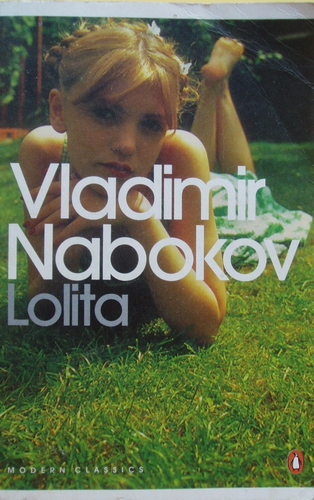
Lolita - Vladimir Nabokov


I have no idea why this novel was written. It is the most beautiful book; the language, the word-play, the finely-tuned emotional resonance, but, like a mouldy orange, it's written around a rotting core...

“Lolita, light of my life, fire of my loins. My sin, my soul. Lo-lee-ta: the tip of the tongue taking a trip of three steps down the palate to tap, at three, on the teeth. Lo. Lee. Ta. She was Lo, plain Lo, in the morning, standing four feet ten in one sock. She was Lola in slacks. She was Dolly at school. She was Dolores on the dotted line. But in my arms she was always Lolita.”

The central theme of this book is deliberately shocking. A man - our narrator, Humbert Humbert - is obsessed with girls, nymphets as he terms them, under the age of 14. He lodges in a house, and becomes infatuated with the landlord’s 12 year old child, Lolita. He then marries the mother who promptly discovers his shameful secret and, by coincidence, dies immediately afterwards. Humbert takes off on a two year ’joy-ride' with the Lolita (now his step-daughter). Soon, they notice they are being followed; creepy events start to occur with increasing regularity, and their sick but stable world begins to unravel.

Reading Lolita is, quite profoundly, a disturbing experience. Our narrator describes his deviant interactions with a child as though the two of them were in a (consummated) adult relationship. He tells us that Lolita is playing games with him, leading him on, teasing him, flirting with him. As a reader, I had to constantly force myself to remember that the object of his affections is twelve, and that the narrator - monstrously - is not reliable.


My thoughts


Reading this novel, I sometimes felt like throwing the book down and yelling ‘why was this written?’.This is not a question with which Nabokov had much sympathy. Sardonically, he writes:

‘Besides the lambs who read [Lolita].. in a spirit of ‘why did he have  to write it?’ or ‘why should I read about maniacs, there has been a number of wise [people]’

I think ‘Why’ is an important question to ask though. And the more I think about Lolita, the more I consider it donut shaped. There is a lot there, but nothing in the centre; no morals to bind it all together, no deeper purpose, no crusade, no point even. It just is. And that's quite difficult to accept.

Nabokov's genius was writing a horned-melon of a book. One that is so breathtakingly good that it must be read, and yet the reading of it will torture you. It will give you glimpses of true beauty, and yet - wantonly - prickle and probe with no desire to leave you a better person.

And that barbed, spiny, nettlesome nature runs down deep into the book’s veins. Because it’s impossible to be shocked continuously for 400 pages. The gritty reality of what is being described leaves you anesthetised and numb. As a reader - just by reading - you tacitly accept Humbert’s behaviour. Worse, we’re all complicit in it, by, as Anthony Burgess termed it ‘nodding scandalised assent’ to Humbert’s crimes.

Lolita almost seems to use the propaganda technique of the Big Lie. By repeatedly framing the the interaction between a 40 year old man and his 12 year stepdaughter as a relationship - when it isn’t that at all - the reader cannot help but think inside that frame. And that’s a scary commentary on the human capacity for acceptance. But also a reason for questioning the author’s motivations.
Because again and again, my mind returns to why. Nabokov felt strongly that he didn’t have to justify why he wrote Lolita, and he claimed that ‘Lolita has no moral in tow’. I disagree. Nabokov doesn’t just touch on taboo behaviour, he has written a book which - on the surface - provides a justification, an excuse even, for horrendous crimes. I think it is obvious that the book does not attempt to provide that justification, but that doesn’t relieve the pressing and unanswered question. Why?.

Life +


Lolita opened my mind to the beauty of language. Nabokov’s writing is quite simply stunning. Not only did I learn lots of new words reading it (crepitate, for example), but I’ve also never seen writing like it. Nabokov makes the words on the page bend precisely to his will. If you want to write, I don’t think you can afford to miss seeing what this author can do. It is almost like a super-power.

I think I took away something about real life too. Humbert's main characteristic is his lack of accountability. Throughout the whole novel, he’s happy to take responsibility for his actions - calling himself a monster etc. - but he sees these actions as inevitable and uncontrollable. He commits the gravest sins without any attempt to stifle his inner demons. We never see him wrestle with himself, still less manage to exercise self-control.

Humbert acts as if a poet’s mind was taped to a robot body. The poet watches and soliloquizes, and writes beautiful expressive words about the actions of this robot. A robot that is programmed to act like a monster and, Humbert feels, completely outside the sphere of his control. In this sense, he is a caricature, most of us don’t abandon our free will so freely, and most don’t have urges so dark. But part of the reason reading Lolita causes us such pangs, is because that same faculty is in us all. We all spend most of the time looking down, watching ourselves acting out our lives. Perhaps we need to wake up.


In fewer words

Prickly, disturbing and energetically amoral, Lolita is a wild trip, a great read, a vibrant splash of colour, and a fizzling fire-work of great writing. One thing’s for sure, as soon as you open the front page, Lolita will reach into your guts and pull you on a madcap rush to places that you don’t want to go. It’s a mouldering orange, a horned melon, an exploration of beauty, and a declaration of perpetual decay. It simply aches to be read; after all, the rest is rust and stardust.


***

You can get Lolita here.