Showing posts with label reading. Show all posts

Wednesday, 10 July 2013

Gulliver's Travels (Jonathan Swift)

This is one of the best things I have ever read. It is almost a cliche now to describe Gulliver’s Travels as a biting satire, but it is utterly true - and a wonderful one to boot. In a shortened, picture form, Gulliver’s Travels is one of the world’s most popular children’s book so the plot feels familiar and almost nostalgic. Along with rice cakes and marmite sandwiches, reading it took me back to my childhood. Suddenly I was eight again and running around the playground.

The story goes a bit like this. Gulliver leaves his wife and child to go travelling, and from then on has a set of the weirdest, most fantastical adventures ever set to paper. Shortly after leaving, Gulliver shipwrecks and stumbles upon Lilliput, the renowned land of little people that can walk around on his hand. After the ensuing adventures and a journey home, Gulliver embarks on a further bold voyage, but this time his ship flounders on Brobdingnag, a nation of giants where suddenly it is Gulliver who finds himself a little person. Next, after leaving, he finds all sorts of odd peoples – a floating island in the sky, magicians who can conjure the dead – and finally a land of wise and logical horses, the perspicacious Houyhnhnms. Alongside these omnibenevolent nags, he makes a discovery that turns his blood a-chill. Here, he encounters the infamous ‘Yahoos’. A savage, untameable, splenic animal that seems to bear more than a passing resemblance – in looks and habits – to the species of which Gulliver is a committed member: the unhumble human...

It's wonderful

There is just something so special about this book. It might not be the most significant aspect, perhaps, but I even loved the 16th century-style writing style. For example, every proper noun is capitalised, and letters starting with ‘h’ are always preceded with ‘an’: I saw with mine Eyes, an Hundred Savages advancing upon my poar Self.  This must have been standard at the time, but it now lends the books a delightful realism. I’m sure it gets edited out of a lot of modern editions, but I think that’s a mistake.

Gulliver’s personality binds the whole thing together like an egg in cake batter. His most striking characteristic is an ostentatious gallantry. Beached on Lilliput, and captured by the little people, he quickly pays tribute and accepts the rule of the tiny Lilliputian king, even though he is no bigger than his face; soon describing him as ‘my gracious majesty’. Ultimately, Gulliver feels entitled – being a British citizen of Her Majesty the Queen – to be treated civilly and with decorum. He expects to be welcomed into the court of every king, and for his needs to be met – food, wine and a new ‘suit of cloaths’ wherever on the globe he finds himself. This entitlement can lead him to be dreadfully naive, at times unaware of clear and present danger. 

What makes us human?

Yet what makes the book interesting is how Gulliver sees the world. It is a fascinating sum of contradictions. Gulliver is overtly proud of his country, and acts as an ambassador wherever he goes. But he also embarks on new life-styles with gusto. In three of the places he visits, he settles, stays for years, learns the language and embraces their lifestyle - even though it’s almost the opposite of his own. However, Gulliver thinks of his own society as far more sophisticated and on a ‘higher level’ than any of the civilisations he visits. In fact, nothing gets him questioning his homeland, until he meets the Yahoos....

The Yahoos are a breed of savage humans. Gulliver is repulsed by them because he sees the character of the despicable Yahoo’s mirrored in humans, and the character of the horses as far superior. So, he never quite manages to critique British society and it’s institutions – something that is changeable – but just the human character – which isn’t (especially not en masse). 

I think that’s quite significant, and clearly a Swiftian commentary on something. I see it as saying a range of things from a kind of Thatcherite proclamation that society doesn’t exist, to the idea that culture is just the emergent phenomena that arises out of the character’s of the people that live there. I think that’s dead wrong - and actually so would most sociologists today. Institutions are incredibly important, but Gulliver is only concerned with character. I can’t quite tell which side of the fence Swift himself sat on – but since his most vicious critique is on personality traits, I’ll put flag down and say that he got this one wrong. He savagely critiqued humans character - and finds fault with the echos of our animal urges in the way we live, but he didn’t stop to mention how amazing it is that we’ve developed institutions that work well despite all our Yahoo-like greed.

Life Lessons

I think I missed a lot of the satire in the book – especially since I’m not au fait with the subtleties of George I’s court – but I think I got the main point, and it’s exceptionally clever. By creating and describing so many fantastical species – little men, big men, magicians, talking horses – the book is essentially an exercise in frame setting. It is priming us, by poking fun at imaginary beings, to be able to picture ourselves objectively. Gulliver rocks up at Lilliput and finds a bunch of weird little people, but what if he rocked up in Britain, what strange species would he find there? Humans. 

Swift want us to take a long look at what we really are. For him it’s obvious. We’re just savages, monkeys, a slave to our urges. And we've painstakingly built a society that pretends we’re not. That’s problematic, because it means we’re literally unaware of how stupid some of our actions are. Once you start looking as Jonathan Swift wanted us to look, everything becomes ridiculous. From living in houses that are so far superfluous to our needs, to border conflicts, to political slanging matches. This is all comes from animalistic, primal urges – which are just stupid. And yet we pretend that there’s a good intelligent reason for everything, that things are the way they are for a reason. As a culture, we do not live rationally. Our selfish, grubbing instincts are built into the very fabric of our society. But, as I mentioned earlier, that’s only half the story. Actually, society is brilliant, amazing, incredible - and it’s a testament to human ingenuity that we’ve managed to design ourselves a system that succeeds not despite, but because of, the character of the human race. 

And yet, we can do more. We can continue to strive towards building a better world. To be better, to live better together, and to help those that get left behind. It's not all doom and gloom, but there's no time for complacency either. Let's get cracking...


Wednesday, 22 May 2013

Germinal (Émile Zola)


I asked a French friend about Germinal, by Emile Zola, and he said that since this book is on the French syllabus, it is often thought about with a groan. That’s a shame, because I loved all the books I read in school. For some people, I can imagine that remembering a novel they were forced to read, takes them back to those dusty, classrooms full of youthful boredom. For me, reading always had the opposite effect; novels I read in school let my imagination soar and transported me to distant worlds far away from the a lecturing, hectoring Mrs Gibbs. I thought Germinal was amazing. This book not only paints a vivid, and necessary, picture of poverty, but also provides some interesting challenges to the economic system we live in.

Germinal tells the story of a miner’s strike in 18th century France. Etienne is a poor but bright drifting worker. Impoverished and hungry, he comes across a mining village and falls into a job hewing coal. It’s backbreaking work. The villagers slog underground all day in the dark and the damp, but are barely paid enough to survive. Etienne becomes deeply radicalized by the suffering he sees around him; the capitalist system that allows this to continue must be immoral and corrupt.  At the same time, the coalmine bosses are trying to reduce the workers’ pay yet further. The villagers are scared that they simply will not be able to live under these harsh new terms. Etienne, with his staunch political views, is well placed to lead the coalminers into a standoff - a strike. This strike becomes bloody and brutal as the workers starve, and the company’s profits dry up. Anger bubbles and festers, and the standoff becomes a war. This is no longer about simply trying to win a bread-line wage. They want to send the whole system to hell. And at the root of it all is a crazy dream – that all men are equal under the sun.

My thoughts

This book is the perfect antidote to Atlas Shrugged by Ayn Rand.  In Atlas Shrugged, unfettered capitalism leads to advancement and beatification of the human race. In Germinal it leads to effective slavery, conflict and suffering. I don’t think Ayn Rand’s was blind to the ‘Germinal’ critique, she just didn’t care. I think she would say that if a man let himself live a miserable existence  - in a coalmine or anywhere else - then he was a fool.  But the two books are perfect to read together. At times, they almost seem to be in dialogue with each other putting forward arguments and counter-arguments. For example, Atlas Shrugged posits that since it is the capitalist that takes the risk that creates wealth, they deserve the rewards. But Germinal neatly undercuts this by comparing these wealthy bourgeois throwing around a little of their money, whilst the workers stake their lives on the company.

Socialism

Germinal isn’t exactly an advocate for socialism. In fact, the socialist beliefs and believers are exposed throughout as somewhat naïve and all too human.  However, it certainly is a shrill voice highlighting rottenness at the core of the capitalist system. 

And I think it’s very effective. The descriptions of poverty in the book are vivid and crushing.  It’s always worth remembering that we belong to an economic system that can treat people very cruelly. And also that it is in our nature to accept and live with it, rather than to challenge it. The kind of suffering that Germinal describes is still endemic in the world today, and I feel far too – dangerously too – complacent about it.  Reading this novel flared up something inside of me, and I found it quite deeply radicalizing.  Whatever the cause, and whatever the reason, and however impossible it is to stop – I think it must be a universal declaration that this kind of suffering is wrong.

It is true though, that for those in the West, Germinal’s central point has become less relevant. The story describes how workers might get trapped in horrible working conditions with a wage that is not enough to survive. Today, the legacy of the Union movement has ensured a certain standard of work safety, and we have a minimum wage, both of which largely prevents the kind of situation that Germinal describes. 

Perhaps then, Germinal can be seen today as a good argument against socialism. A problem – poor working conditions and lower wagers - had a good solution within the current system. Beyond this, Germinal describes the wider rumblings of socialism  - calls to destroy the bosses, uniting all the workers of the world, totalitarianism. But none of this is effectual in the book, and none of it has been effective in real life.

I’d like to make one final moderating point. It’s easy to write a story that focuses on a salient example of human suffering, but it is harder to focus on the things that are not as visible. I’d suggest some things to keep in mind whilst reading. 1) If these miners weren’t employed in a coalmine, they might have been in worse work or unemployed, or dead from starvation. 2) The coal they were producing was powering the industrial revolution. This means a) it was directly improving thousands of peoples lives, powering hospitals, schools and saving lives b) it was a temporary phase the West needed to go through to develop. Billions of people are better off now – and that couldn’t have happened if men didn’t go down coalmines. 3) Worker’s conditions did improve, and worker’s did take a greater share of the profits 4) For most of history nasty jobs were normal, and it is only the capitalist system that has ever liberated people from it.

One more thing

Germinal is a really exciting book that will pull you into a dark and unfamiliar world.  Some of the scenes underground, trapped in bowels of this living mine are scarier and more claustrophic than any horror film I’ve seen.  But more than that, Germinal is a question, a challenge, and a call to arms to stand-up for the disenfranchised of the world.

Wednesday, 15 May 2013

Strange Case of Dr. Jekyll and Mr. Hyde


Robert Louis Stevenson claimed that he got most of the inspiration for his writing from lucid dreams. Jekyll and Hyde came to him in a nightmare - his wife concerned at his fitful sleeping cries, woke him.  Disappointed he replied ‘'Why did you wake me? I was dreaming a fine bogey tale.' 

The book opens with Mr. Utterson, a prosecutor, who is friends with a friendly and scholarly man, Dr Jekyll. He has been hearing from various sources about the dastardly exploits around London of one Mr. Hyde. Hyde, gossip tells, had recently wantonly trampled over a girl in the street. Mr. Utterson is concerned as he knows that Jekyll has some kind of relationship with this fiendish Hyde. In fact, Jekyll has given Hyde unrestricted access to his house to come and goes as he pleases. Fearing his friend is under some dark influence, Utterson makes some enquiries. These become even more urgent when Mr. Hyde is believed to have brutally murdered an MP. Finally, Utterson discovers the truth in a letter from Jekyll. It explains that, with the aid of a ghoulish medical concoction, he has managed to split his personality into a good part and an evil part. However, now having run out of potion, he must remain permanently as the infamous and degenerate Hyde. 

My thoughts

This story is phenomenally well known. So much so that the main characters ‘Jekyll and Hyde’ are commonly used to describe anyone whose personality is somewhat changeable. Our cultural knowledge of Dr. Jekyll and Mr. Hyde is so strong that actually reading the thing feels like going back to your house and finding everything in a slightly different place. There is much less exciting dual personality, good vs. evil, action than you would expect from a book that typifies the genre. Even the title, ‘Strange Case of Dr Jekyll and Mr Hyde’ feels weird and wrong. 

Jekyll and Hyde is thought-provoking though. To an extent, living in society necessitates suppressing our basest urges. You could think of it like a clown’s balloon. As we squeeze one part of our personality into an acceptable shape, all that energy just pops up somewhere else. I think it’s also quite familiar to feel a distinct shift between modes. We talk of ‘bottling things up’ and then letting them go, or ‘blowing up’. And we notice this in our friends too. Part of the reason I think Jekyll and Hyde is so well known, is it speaks to the truth of this. People often do seem to have different sides to their personality, and this novella is the archetypal narrative of this.

Stories help us understand the world around us. They give us a structure to events. From religious stories to fairy tales and fables each contains pinches of reality, triple distilled down to its very essence. Jekyll and Hyde, then, describes something quite fundamental in the human experience. I think it was the first story to capture  our changeable nature in a way that resonates with the world we live in.

Welcome to the dark side

Whilst Jekyll and Hyde is an exemplar story, I think its morality is quite subversive - and very different - to that of our times. I see it as a deeply and fundamentally a Christian narrative - which is odd because Louis Stevenson rejected Christianity. To me the basic moral takeaway is: don’t dabble with your dark-side, because it will consume you. The plot condensed into one sentence would  be: Jekyll releases some of his inner base urges, finds he can’t control them and get stuck as his shadow self.

Some say that, actually, Dr. Jekyll went too far in suppressing his animalistic urges - when he released the valve it came out like an explosion. But I don’t think that really makes sense. Mr. Hyde is far darker than Dr. Jekyll is good. Jekyll is, if anything, a normal member of society, not some bastion of saintliness. He isn’t helping old ladies cross the street or donating his money to orphan children. In fact he dabbles in a dark laboratory dissecting animals, and says that although he tries hard to be pure he continually experiences dark urges. Hyde, on the other hand, is a murderous thug, almost sub-human in his capacity for evil and lack of regard for social norms.

So to me, the story wants to tell us that in every human there is a bottomless pit of evil which can’t be allowed out without devastating consequences. That sounds very evangelical. Taking one more small step of conjecture, it almost seems that Louis Stevenson took on board all of the teachings of Christianity about the nature of humanity, and rejected just the spirituality. By doing so, perhaps he felt forced into taking the pessimistic view that there was then nothing we could do to control the animal inside all of us. Stevenson even appears to have lived a little of the libertine lifestyle too. 

By my reading, Jekyll and Hyde isn’t really an exploration of good and evil, it is really just a study of the evil - the animal - inside of us.

The last word

Jekyll and Hyde is a short little book - worth a read if you've got an hour to kill. What more could you ask for? It’s a little gripping Victorian horror that explores the consequences of living a double life, but more importantly it’s a good look at the philosophy of what it is to be human.

Wednesday, 17 April 2013

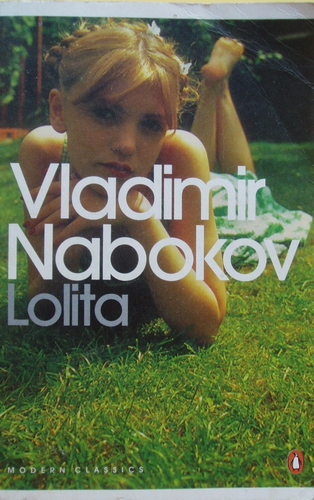
Lolita - Vladimir Nabokov


I have no idea why this novel was written. It is the most beautiful book; the language, the word-play, the finely-tuned emotional resonance, but, like a mouldy orange, it's written around a rotting core...

“Lolita, light of my life, fire of my loins. My sin, my soul. Lo-lee-ta: the tip of the tongue taking a trip of three steps down the palate to tap, at three, on the teeth. Lo. Lee. Ta. She was Lo, plain Lo, in the morning, standing four feet ten in one sock. She was Lola in slacks. She was Dolly at school. She was Dolores on the dotted line. But in my arms she was always Lolita.”

The central theme of this book is deliberately shocking. A man - our narrator, Humbert Humbert - is obsessed with girls, nymphets as he terms them, under the age of 14. He lodges in a house, and becomes infatuated with the landlord’s 12 year old child, Lolita. He then marries the mother who promptly discovers his shameful secret and, by coincidence, dies immediately afterwards. Humbert takes off on a two year ’joy-ride' with the Lolita (now his step-daughter). Soon, they notice they are being followed; creepy events start to occur with increasing regularity, and their sick but stable world begins to unravel.

Reading Lolita is, quite profoundly, a disturbing experience. Our narrator describes his deviant interactions with a child as though the two of them were in a (consummated) adult relationship. He tells us that Lolita is playing games with him, leading him on, teasing him, flirting with him. As a reader, I had to constantly force myself to remember that the object of his affections is twelve, and that the narrator - monstrously - is not reliable.


My thoughts


Reading this novel, I sometimes felt like throwing the book down and yelling ‘why was this written?’.This is not a question with which Nabokov had much sympathy. Sardonically, he writes:

‘Besides the lambs who read [Lolita].. in a spirit of ‘why did he have  to write it?’ or ‘why should I read about maniacs, there has been a number of wise [people]’

I think ‘Why’ is an important question to ask though. And the more I think about Lolita, the more I consider it donut shaped. There is a lot there, but nothing in the centre; no morals to bind it all together, no deeper purpose, no crusade, no point even. It just is. And that's quite difficult to accept.

Nabokov's genius was writing a horned-melon of a book. One that is so breathtakingly good that it must be read, and yet the reading of it will torture you. It will give you glimpses of true beauty, and yet - wantonly - prickle and probe with no desire to leave you a better person.

And that barbed, spiny, nettlesome nature runs down deep into the book’s veins. Because it’s impossible to be shocked continuously for 400 pages. The gritty reality of what is being described leaves you anesthetised and numb. As a reader - just by reading - you tacitly accept Humbert’s behaviour. Worse, we’re all complicit in it, by, as Anthony Burgess termed it ‘nodding scandalised assent’ to Humbert’s crimes.

Lolita almost seems to use the propaganda technique of the Big Lie. By repeatedly framing the the interaction between a 40 year old man and his 12 year stepdaughter as a relationship - when it isn’t that at all - the reader cannot help but think inside that frame. And that’s a scary commentary on the human capacity for acceptance. But also a reason for questioning the author’s motivations.
Because again and again, my mind returns to why. Nabokov felt strongly that he didn’t have to justify why he wrote Lolita, and he claimed that ‘Lolita has no moral in tow’. I disagree. Nabokov doesn’t just touch on taboo behaviour, he has written a book which - on the surface - provides a justification, an excuse even, for horrendous crimes. I think it is obvious that the book does not attempt to provide that justification, but that doesn’t relieve the pressing and unanswered question. Why?.

Life +


Lolita opened my mind to the beauty of language. Nabokov’s writing is quite simply stunning. Not only did I learn lots of new words reading it (crepitate, for example), but I’ve also never seen writing like it. Nabokov makes the words on the page bend precisely to his will. If you want to write, I don’t think you can afford to miss seeing what this author can do. It is almost like a super-power.

I think I took away something about real life too. Humbert's main characteristic is his lack of accountability. Throughout the whole novel, he’s happy to take responsibility for his actions - calling himself a monster etc. - but he sees these actions as inevitable and uncontrollable. He commits the gravest sins without any attempt to stifle his inner demons. We never see him wrestle with himself, still less manage to exercise self-control.

Humbert acts as if a poet’s mind was taped to a robot body. The poet watches and soliloquizes, and writes beautiful expressive words about the actions of this robot. A robot that is programmed to act like a monster and, Humbert feels, completely outside the sphere of his control. In this sense, he is a caricature, most of us don’t abandon our free will so freely, and most don’t have urges so dark. But part of the reason reading Lolita causes us such pangs, is because that same faculty is in us all. We all spend most of the time looking down, watching ourselves acting out our lives. Perhaps we need to wake up.


In fewer words

Prickly, disturbing and energetically amoral, Lolita is a wild trip, a great read, a vibrant splash of colour, and a fizzling fire-work of great writing. One thing’s for sure, as soon as you open the front page, Lolita will reach into your guts and pull you on a madcap rush to places that you don’t want to go. It’s a mouldering orange, a horned melon, an exploration of beauty, and a declaration of perpetual decay. It simply aches to be read; after all, the rest is rust and stardust.


***

You can get Lolita here.

Friday, 5 April 2013

The mind blowing books project

This year I set myself a challenge. At midnight on the first of January - as the clock rung in the new year - my eyes narrowed and my jaw clenched. A New Year's resolution had crystallized in my head, and it was the first one I ever made. In 2013, I will read 50 books.

I've always wanted to spend more time reading - as most people do - so this year I gave myself a mission to do just that. Reading 50 books in a year is roughly one book a week. Clearly, how difficult that is depends on the length and complexity of the books I pick.

The thing is, I don’t want to read just any book...

Otherwise I could spend the year reading, say, the complete works of John Grisham  and Stephen King. I think that would be a damn good time, but I want a little bit more out of this.

When I'm done, I want to come away with something amazing. I want to be challenged. I want my world to be expanded. I want to have new ideas roaming around my head looking for a fight. And I want my mind to be rinsed out liked a sponge, and then filled back up with lovely new stuff.

So I decided the books I would read this year had to meet two simple criteria. I want to read them, and I want to have read them.

For me, the books that meet these two rules can be summed up in three words. The best ones! The way I see it, if I’m going to spend a chunk of my life reading, why wouldn't I simply work backwards down the list starting with the very best?

Of course, ‘the best books’ are not that easy to define. Everyone has their own views. So I’m picking books that don’t just appeal to me, but cry out my name. Books that I think will change my life, will blow my mind, and also that are 'stamped with the mark of permanence'. Books that I would argue are among the best ever written. 

I have a good list in my head - probably a thousand long - of books that I think must be read. But to guide me, I’ve also made liberal use of lists, like this and this.


So, why am I doing it?

I think there are four key reasons.
  • One - I feel almost a rushing, giddy excitement about breathing-in the world’s greatest literature. The very best of the world - amazing ideas, the vibrancy and crush of real life, and the poignancy dreams -  is squeezed like juice into these tiny little books. And I can pour all that wonderful stuff straight into my brain.
  • Two - How could I go my whole life without having read Bleak House? Or War and Peace? To me, that’s inconceivable. I've always wanted to see everything, to do everything. So how could I neglect a book that someone says is the best?
  • Three - Great books are a way to improve your experience of life. They teach you to make better sense of - and express better - the constant, surging stream of reality. I  can't imagine anything much more worthwhile. Living is all we have, so why not learn how to do it better?
  • Four - Finally, I feel like a man on a threshold about to plug himself into a machine. Who knows where this will take me, and what these earth-shattering, mind-changing ideas will do to my brain. I can't wait to find out...

My thoughts

So far, I’m loving it! Reading is taking up more of my life. But I don't feel that it has displaced anything significant. Rather, reading is filling up the cracks in my life. 

I don’t really watch TV or mope around much anymore. Downtime is now reading time. And that's great. I also find a couple of times a week I have to sit down and have a serious reading session. Maybe after work I’ll go to a pub, have a craft beer and read for a few hours. Or spend Saturday mornings reading before going out.

The time I spend reading probably adds up to an average of 11 hours a week. I think that's very doable. My job takes up lots of hours too. I work typically eleven/twelve hour days in the week and go out most evenings. Before I started, I seriously didn't know how I would find the time to do this. Now I don't know how on earth I used to spend those hours.

So far...

Here's the books I've read so far this year.

2)   Poor Economics (I took a non-fiction turn)
4)   War and Peace (part 1, part 2, part 3 )
5)   Moby Dick
6)   Of Mice and Men
7)   Madam Bovary
8)   Labyrinths
9)   Hamlet (coming)
10) Hound of the Baskervilles (coming)
11) Lolita (coming)
12) In Search of Lost Time - volume 1 (currently reading)


Wish me luck!

Adam