Showing posts with label mind-blowing. Show all posts

Wednesday, 28 August 2013

Heroes and Villains (Angela Carter)

This for me was a holiday read, and perhaps I didn’t read Angela Carter’s very best work. I’ll say right at the outset, I’m a bit mystified as to what she was trying to do.

In a dystopian future, a young girl called Marianne is brought up in a village shut off from the world. Dissatisfied with the clinical and routine-driven nature of her life, she runs away with a barbarian who lives in the wild outlands. Half-prisoner, she stays captive in his village, where she experiences a kind of sexual awakening with her barbarian king. Eventually she becomes his bride. They live a disgusting life, surrounding by filth, savages and garbage. But Marianne finds that although, in a rebellious bid for freedom, she has broken away from her rigid upbringing, the constructs inside her mind keep them both more imprisoned than any fence ever could.

Reading the plot summary on the back of the book, I thought the book would be some kind of erotic adventure story. I think the synopsis oversells – or at least mis-sells – the novel. There isn’t really any plot. A girl runs away from home, a few random things happen – there’s some sex, some fighting, some cryptic dialogue – and that’s it.  There’s no narrative structure, or resolution, and the action all takes place in the language of smoke-filled symbolism. So this isn’t one of those plot books, this is one of those say-something-about-the-world books. And that’s fine. The trouble is, I call bullshit...

Bullshit

Richard Boston writing for the New York Times called Heroes and Villains ‘a fable that discusses the roles of reason and imagination in a civilized society.’ The novel definitely does do that, but what’s important isn’t ‘discussion’, it’s what a novel actually has to say, you know, about real life. My feeling about fiction in general is that too many novels use cryptic and symbolic language to make points that are either simple, obvious or even untrue. Further, that unclear or imprecise writing is actually a technique that is used quite cynically to mask meaning that, if it was spelled-out clearly, no one would be interested in or would be obviously wrong. It’s a shame because the best writers use symbolism not to mask their meaning, but to shed light on difficult subjects, or create complicated, intellectually satisfying mosaics of multiple meanings - Moby Dick, or Ulysses spring to mind as almost symphonic in this regard.

I think I’ve got a good bullshit detector, and – I’m sorry – but I picked up a lot of it in Heroes and Villains. Check out this quote:

“What do you see when you see me?' She asked him, burying her own face in his bosom.
'Do you want the truth?'
She nodded.
'The firing squad.'
'That's not the whole truth. Try again.'
'Insatiability,' he said with some bitterness.
'That's oblique but altogether too simple. Once more,' she insisted. 'One more time.'
He was silent for several minutes.
'The map of a country in which I only exist by virtue of the extravagance of my metaphors.'
'Now you're being too sophisticated. And, besides, what metaphors do we have in common?”

I think that’s completely meaningless. I can acknowledge that the writer might have some ideas about her characters that would make that passage make sense. I can ever construct some in my head. Here’s my try: Why does he see the firing squad? Perhaps because her culture is doomed. And insatiable? As it happens, Marianne isn’t particularly insatiable, but it could mean that her culture is. And 'The map of a country in which I only exist by virtue of the extravagance of my metaphors.' Eek. I don’t understand that at all. Perhaps it’s not about the meaning, but about how the words make you feel...

There are several possible half-meanings in that paragraph, but it’s just not clear enough to understand precisely. And any meaning I can extract from it doesn’t really add much value to my life. For example, our civilisation is insatiable and over-reaching itself, and we need to create the idea of savages to in some way define us (I actually don’t think either of those things are true).

The Last Word

So my view is that Heroes and Villains fails. Just like a pun is only funny if it has two distinct levels of meaning, I think symbolism in a book is only clever if the surface level – the plot, the characters etc – makes sense and is engaging. And secondly, hidden meaning is only worthwhile if the meaning you have to work hard to find is profound, or, at the very least, interesting. To me, Heroes and Villains is a masterwork of style over substance - of nice-sounding sentences over ideas, character and plot. I’ll close with this quote. I like how it sounds a lot - but I also think it illustrates well this books deeply vacuous heart:

“Darkness was made explicit in the altered contours of his face. He was like a work of art, as if created, not begotten, a fantastic dandy of the void whose true nature had been entirely subsumed to the alien and terrible beauty of a rhetorical gesture.”


Wednesday, 10 July 2013

Gulliver's Travels (Jonathan Swift)

This is one of the best things I have ever read. It is almost a cliche now to describe Gulliver’s Travels as a biting satire, but it is utterly true - and a wonderful one to boot. In a shortened, picture form, Gulliver’s Travels is one of the world’s most popular children’s book so the plot feels familiar and almost nostalgic. Along with rice cakes and marmite sandwiches, reading it took me back to my childhood. Suddenly I was eight again and running around the playground.

The story goes a bit like this. Gulliver leaves his wife and child to go travelling, and from then on has a set of the weirdest, most fantastical adventures ever set to paper. Shortly after leaving, Gulliver shipwrecks and stumbles upon Lilliput, the renowned land of little people that can walk around on his hand. After the ensuing adventures and a journey home, Gulliver embarks on a further bold voyage, but this time his ship flounders on Brobdingnag, a nation of giants where suddenly it is Gulliver who finds himself a little person. Next, after leaving, he finds all sorts of odd peoples – a floating island in the sky, magicians who can conjure the dead – and finally a land of wise and logical horses, the perspicacious Houyhnhnms. Alongside these omnibenevolent nags, he makes a discovery that turns his blood a-chill. Here, he encounters the infamous ‘Yahoos’. A savage, untameable, splenic animal that seems to bear more than a passing resemblance – in looks and habits – to the species of which Gulliver is a committed member: the unhumble human...

It's wonderful

There is just something so special about this book. It might not be the most significant aspect, perhaps, but I even loved the 16th century-style writing style. For example, every proper noun is capitalised, and letters starting with ‘h’ are always preceded with ‘an’: I saw with mine Eyes, an Hundred Savages advancing upon my poar Self.  This must have been standard at the time, but it now lends the books a delightful realism. I’m sure it gets edited out of a lot of modern editions, but I think that’s a mistake.

Gulliver’s personality binds the whole thing together like an egg in cake batter. His most striking characteristic is an ostentatious gallantry. Beached on Lilliput, and captured by the little people, he quickly pays tribute and accepts the rule of the tiny Lilliputian king, even though he is no bigger than his face; soon describing him as ‘my gracious majesty’. Ultimately, Gulliver feels entitled – being a British citizen of Her Majesty the Queen – to be treated civilly and with decorum. He expects to be welcomed into the court of every king, and for his needs to be met – food, wine and a new ‘suit of cloaths’ wherever on the globe he finds himself. This entitlement can lead him to be dreadfully naive, at times unaware of clear and present danger. 

What makes us human?

Yet what makes the book interesting is how Gulliver sees the world. It is a fascinating sum of contradictions. Gulliver is overtly proud of his country, and acts as an ambassador wherever he goes. But he also embarks on new life-styles with gusto. In three of the places he visits, he settles, stays for years, learns the language and embraces their lifestyle - even though it’s almost the opposite of his own. However, Gulliver thinks of his own society as far more sophisticated and on a ‘higher level’ than any of the civilisations he visits. In fact, nothing gets him questioning his homeland, until he meets the Yahoos....

The Yahoos are a breed of savage humans. Gulliver is repulsed by them because he sees the character of the despicable Yahoo’s mirrored in humans, and the character of the horses as far superior. So, he never quite manages to critique British society and it’s institutions – something that is changeable – but just the human character – which isn’t (especially not en masse). 

I think that’s quite significant, and clearly a Swiftian commentary on something. I see it as saying a range of things from a kind of Thatcherite proclamation that society doesn’t exist, to the idea that culture is just the emergent phenomena that arises out of the character’s of the people that live there. I think that’s dead wrong - and actually so would most sociologists today. Institutions are incredibly important, but Gulliver is only concerned with character. I can’t quite tell which side of the fence Swift himself sat on – but since his most vicious critique is on personality traits, I’ll put flag down and say that he got this one wrong. He savagely critiqued humans character - and finds fault with the echos of our animal urges in the way we live, but he didn’t stop to mention how amazing it is that we’ve developed institutions that work well despite all our Yahoo-like greed.

Life Lessons

I think I missed a lot of the satire in the book – especially since I’m not au fait with the subtleties of George I’s court – but I think I got the main point, and it’s exceptionally clever. By creating and describing so many fantastical species – little men, big men, magicians, talking horses – the book is essentially an exercise in frame setting. It is priming us, by poking fun at imaginary beings, to be able to picture ourselves objectively. Gulliver rocks up at Lilliput and finds a bunch of weird little people, but what if he rocked up in Britain, what strange species would he find there? Humans. 

Swift want us to take a long look at what we really are. For him it’s obvious. We’re just savages, monkeys, a slave to our urges. And we've painstakingly built a society that pretends we’re not. That’s problematic, because it means we’re literally unaware of how stupid some of our actions are. Once you start looking as Jonathan Swift wanted us to look, everything becomes ridiculous. From living in houses that are so far superfluous to our needs, to border conflicts, to political slanging matches. This is all comes from animalistic, primal urges – which are just stupid. And yet we pretend that there’s a good intelligent reason for everything, that things are the way they are for a reason. As a culture, we do not live rationally. Our selfish, grubbing instincts are built into the very fabric of our society. But, as I mentioned earlier, that’s only half the story. Actually, society is brilliant, amazing, incredible - and it’s a testament to human ingenuity that we’ve managed to design ourselves a system that succeeds not despite, but because of, the character of the human race. 

And yet, we can do more. We can continue to strive towards building a better world. To be better, to live better together, and to help those that get left behind. It's not all doom and gloom, but there's no time for complacency either. Let's get cracking...


Wednesday, 29 May 2013

Hamlet

This play is - of course - brilliant, archetypal, riveting and confounding all at once. On finishing it, I just wanted to read it again in order to pick up on all the things that I had missed. And then, no doubt, again. In fact, I got the feeling that life wouldn’t be too bad if I just listened to a recording of Hamlet on repeat endlessly, forever.

After one parse, there is just so, so much that I missed. But I think I got a lot too. I read an Open University text with a page of explanatory notes on the left of each page of play - that helped.

Hamlet is a play worth thinking about. Unlike with lots of fiction, asking yourself why the characters act the way they do, trying to go beyond the words into the psychology of the characters is very fruitful. There is always a good reason for everything.

The mentality of Hamlet losing his nerve as he yearns to murder the usurping king seem so... human. Whilst reading - and afterwards - I found myself slotting parts of my life in the Shakespearean mold; the narrative helping me to understand the world around me. Much of life is described in this play.

And of course, it’s a tragedy. I don’t think it’s too much of a spoiler to say that everyone ends up dying in a heap on the floor. The drama builds and builds, and the tension ratchets up until the final explosive scene. I found the play quite claustrophobic. The plot revolves around a tight band of courtiers and kings who become cloistered, feeding off each others contrivances, grievances and dark impulses. There is no light from the outside world to disinfect this rank pit of emotions.  Their lives become mentally unhealthy, a steaming cesspool of bubbling murkiness and frustrated desire, that eventually overflows into spectacular and chaotic doom.

My thoughts 

I recommend reading Hamlet. I have seen the play on stage twice, watched the film and listened to a radio production. But reading enabled a completely different - and richer - experience. Watching Hamlet as a play allows you to pick up on the context. You can see what’s going on by the expressions and intonation of the actors. It makes the play seem alive.

However, Shakespeare is very densely packed with information. For example take this phrase:

 “The dram of evil doth all the noble substance of a doubt to his own scandal”,

If I heard an actor say that, I might understand the emotion behind the speech, but I wouldn't have time to decode the metaphor. To me, it means ‘a little evil in someone makes us doubt all their good qualities - which is to our detriment’.

I think that’s quite profound. If someone is generally nice, and they act nastily one day we might say ‘now I’ve seen what they’re really like’. Too often people are willing to let a small amount of bad behaviour colour an overwhelmingly positive experience of someone. I find Shakespeare full of this kind of deep insight about life, and it’s easy to miss when simply watching a play.

I bravely attempt a criticism

I can’t really critique Shakespeare (I think it’s a reasonable assumption that the play is operating on a deeper level that I am), but if someone forced me to, I could perhaps come up with one thing. I was slightly disappointed with a plot device in the last act. Hamlet is dueling Laertes with swords. Laertes, taking part in a plot developed with the king, has poisoned his sword in order to try and kill Hamlet. Half way through the duel they - somehow! - switch swords, with Hamlet now holding the poisoned one. Hamlet promptly stabs Laertes with the poison tip who (spoiler alert) dies.

Wait a second - during a duel they somehow manage to swap swords?! This seems such a random, unbelievable course of events, almost as if it were just a device to make sure that both characters die. There was an asterisk in the text that I read saying ‘this might seem crude, but actually during live action this could happen very easily in a scuffle’. I’m not too convinced. Quite a crucial outcome of the play hangs on Hamlet and Laertes accidentally switching swords whilst fencing.

The last word

Should everyone read this?  God, yes.

Wednesday, 1 May 2013

If on a Winter's Night a Traveller (Italo Calvino)


If on a Winter’s Night a Traveller is one of the more imaginative books I have read. Like a car full of clowns, it’s packed full of wackiness just bursting to get out and make you smile.

This book’s hero is you, the reader. The first chapter describes your attempts to get comfortable and concentrate on this new book you’ve just bought. And then, in the second chapter, the novel begins. It seems like an engaging story, perhaps a thriller, a spy story with hints of espionage. You’re hooked. But then - the third chapter explains - there is a printing error and the part of the book you’ve read is just repeated over and over again. Oh no! You go to the bookshop to try and purchase an error-free version. You end up picking up a pretty girl and a new copy which, in the fourth chapter, you begin to read. But it soon becomes clear that this is not the same story at all... You read on anyway. It is about two people who are about to completely switch lives. How intriguing. And there’s a girl involved. She causes the two main characters to get into a dramatic fight. You’re hooked! But the reading experience is frustrated, and - again - it is possible to get no further than the end of the first chapter.

In fact, every even chapter of Winter’s Night is the first chapter of a new novel. And every odd chapter covers the main story-arc that explains why you are starting all these damn books. This story-arc takes you - the hero - on a wild caper around the world, there’s international book smuggling, rouge-translators, censorious dictators and even space for a little bit of a love.

My thoughts

Winter’s Night brought to my mind At Swim Two Birds, Tristram Shandy, Paul Auster, Nabokov, Borges, and the Eyre Affair. I would file this under inter-textual meta-fiction, and I have a bit of a soft-spot for the genre.

That said, I found reading this novel slightly numbing. Every time I got to a new opening chapter, I would sigh, look up and want to put the book down. That’s because it takes a bit of effort to start reading a new book; you have to learn about a new world and a whole new set of characters. And it would be easy to resent that effort, if there wasn’t a return on your investment. And there just isn’t in this book. Ultimately, since the opening chapters don’t ever go anywhere, it felt slightly pointless reading them. I knew that I was going to be left hanging and disappointed, so I didn’t emotionally invest in any of the characters.

That meant that I found ‘a book of first chapters’ a bit of a gimmick. It’s a really neat idea, but it actually got in the way of telling a good story. Perhaps I would have enjoyed it more if Calvino had in some way wrapped up the myriad of stories he started. But I understand that would have defeated the purpose.

I felt the same way about the main character. When I first opened the book, and saw that it was all about ‘you, the reader’, I got a real rush of delight. ‘That’s me!’ I thought.  But that feeling wore off pretty quickly. Obviously I wasn’t doing any of the things that the book described, so ‘You’ stopped being ‘me’ and simply became just the name of the book’s main character. Again, it felt slightly gimmicky because, although it’s a brilliant idea, keeping it up for the whole book seemed redundant - and even detrimental - to my enjoyment.   

One more thing, the story arc didn’t stick as close as I would have liked to coherence. Great novels can have whacky things happen, and great writing can be written hazily and ambiguously as though looking through a smoke-filled room. But I think Winter’s Night tries to do both of those things in the same novel, and I’m not sure they go. To me, it started to feel like absolutely anything could happen, but it just didn’t matter because none of it was real.

I did like this book. I really did. There was a breathtaking amount of originality in there. And Calvino is clearly a phenomenal writer. Perhaps my reservations just come down to my philosophy of reading. I like books that contain truths about human nature, that deepen my understanding or sharpen my emotions. Calvino offers a more aesthetic enjoyment -  reading as pleasure for it’s own sake, not to get anywhere (even to the end of the book) but simply to enjoy the cleverness, and quality of the writing. It’s the kind of pleasure you get from dipping your toes in a cool mountain stream, feeling the water flow gently over them.

If you like this book, I think you will very much like two novels by Flann O’Brien - At Swim Two Birds, and The Third Policeman. To my eyes they were similar - exceedingly well written, and lots of fun - but even more imaginative, inventive(!) and crazy than If On a Winter’s Night a Traveller.

In fewer words

This book is a little bit bonkers, and it’s bursting at the seams with the sizzling crackle of a technicolour imagination. This book isn’t just in 3D - it’s in 7D! Yeah, that doesn’t make any sense. Neither does the book. But it will overwhelm your senses, and come at you from every direction. And the hero of it all, is you.


Friday, 12 April 2013

The Top Eight Plot Holes in the Hound of the Baskervilles


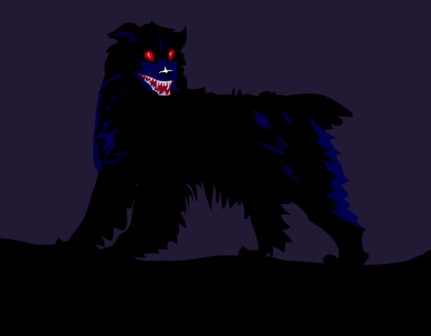
I loved reading Hound of the Baskervilles, but I think the plot is as holey as Emmental cheese (or Pope Francis to coin a pun).  I don't think these plot-holes really take away from how fun the book is. Sherlock Holmes stories suspend your disbelief, and clearly they are not meant to be realistic. Pointing that out might be as obvious as the classic newspaper headline - Teen Pregnancy Drops Off  Significantly After Age 25 - but, just for fun, here are the top eight plot holes in the Hound of the Baskervilles.

This post assumes you’ve read it, so will contain many spoilers. You can check out my review here.


1. The old Baronet Baskerville dies of fright when Stapleton, the murderer, sets a dog on him. But could Stapleton really count on killing the old Baronet ‘of fright’? The hound chased after him, but what if he simply hadn’t died? Sherlock describes this as a ‘flash of genius’, but surely, at the very best, it is quite a flimsy plan.

2. Apparently, the only way Stapleton could get the old Baronet out of the house (in order to frighten him with the dog) was through an incredibly convoluted process. First, he pretends that his wife is his sister. Then he courts a girl in a neighbouring town, making her fall in love with him. He then asks her to write the Baronet a note asking him to meet her by a fence at night. It’s slightly far-fetched, and couldn’t he just have forged the note himself? But more pressingly, if he was bent on murder using 'frightened by a big dog' as the murder weapon, couldn't he simply have released it into the mansion?

3. In the final scene, Stapleton - hoping to dispose of Henry Baskerville - releases the hound on him as he walks home through the moor. But what was he hoping was going to happen? This young man wouldn’t die of fright like the old Baronet.  Sherlock answers this question with a hand-wave, perhaps the dog was hungry and would eat him. 

That seems unlikely, but it also begs the question, why on earth did Stapleton daub the dog in phosphorous and paint for Henry?  He used that to foster the demonic dog myth - but since Henry wouldn't die of fright, what was he hoping was going to happen?

4. Henry Baskerville walks home in the final scene when he is attacked by the hound. Sherlock has to rescue him with a revolver. But why didn't Henry simply carry a revolver himself? The only assistance that Watson and Holmes provided was to shoot the dog. In fact, if Henry Baskerville had just carried a gun around with him, Sherlock Holmes need not have bothered with the case at all.

5. Most dammingly of all, what was Stapleton hoping would happen after killing the two Baronets? He was - secretly - a Baskerville, but had long called himself Stapleton. Presumably he kept the false name so that no one would guess he had a motive for murdering the two Baskervilles. But, clearly, he would have to change his name to eventually claim the fortune, at which point he would reveal his motive. 

Sherlock speculates that perhaps he would go to South America afterwards and tie everything up there. That is pretty weak. So the plan is 1) Kill all the Baskervilles 2) Go to South America 3)??? 4) Profit!

6. Why did Stapleton pretend his wife was his sister? It seemed to serve only the most tenuous purpose, but how in the world could he have known that he needed to make a girl fall in love with him in order to get her to send a note to the Baronet before he came to Devon? The answer - he couldn't.

7. From Wikipedia: Dr Mortimer is an expert on phrenology, heredity and reversion, yet didn't spot that Stapleton resembles the portrait of Hugo Baskerville

8. Lastly, if everyone kept hearing a big howling dog on the moor, and a big dog’s foot-print turned up at the scene of the first murder, why didn’t someone just go look for it? I simply don't understand why everyone would have assumed it was a myth or a demonic ghost. If someone hears a dog howling - especially Sherlock Holmes, the bastion of rationality -  then the most likely explanation is that there is a dog near by. 

***

You can buy Hound of the Baskervilles here

Alternatively, this book looks quite fun. It's called:  Sherlock Holmes was wrong, reopening the case of the Hound of the Baskervilles


Friday, 5 April 2013

The mind blowing books project

This year I set myself a challenge. At midnight on the first of January - as the clock rung in the new year - my eyes narrowed and my jaw clenched. A New Year's resolution had crystallized in my head, and it was the first one I ever made. In 2013, I will read 50 books.

I've always wanted to spend more time reading - as most people do - so this year I gave myself a mission to do just that. Reading 50 books in a year is roughly one book a week. Clearly, how difficult that is depends on the length and complexity of the books I pick.

The thing is, I don’t want to read just any book...

Otherwise I could spend the year reading, say, the complete works of John Grisham  and Stephen King. I think that would be a damn good time, but I want a little bit more out of this.

When I'm done, I want to come away with something amazing. I want to be challenged. I want my world to be expanded. I want to have new ideas roaming around my head looking for a fight. And I want my mind to be rinsed out liked a sponge, and then filled back up with lovely new stuff.

So I decided the books I would read this year had to meet two simple criteria. I want to read them, and I want to have read them.

For me, the books that meet these two rules can be summed up in three words. The best ones! The way I see it, if I’m going to spend a chunk of my life reading, why wouldn't I simply work backwards down the list starting with the very best?

Of course, ‘the best books’ are not that easy to define. Everyone has their own views. So I’m picking books that don’t just appeal to me, but cry out my name. Books that I think will change my life, will blow my mind, and also that are 'stamped with the mark of permanence'. Books that I would argue are among the best ever written. 

I have a good list in my head - probably a thousand long - of books that I think must be read. But to guide me, I’ve also made liberal use of lists, like this and this.


So, why am I doing it?

I think there are four key reasons.
  • One - I feel almost a rushing, giddy excitement about breathing-in the world’s greatest literature. The very best of the world - amazing ideas, the vibrancy and crush of real life, and the poignancy dreams -  is squeezed like juice into these tiny little books. And I can pour all that wonderful stuff straight into my brain.
  • Two - How could I go my whole life without having read Bleak House? Or War and Peace? To me, that’s inconceivable. I've always wanted to see everything, to do everything. So how could I neglect a book that someone says is the best?
  • Three - Great books are a way to improve your experience of life. They teach you to make better sense of - and express better - the constant, surging stream of reality. I  can't imagine anything much more worthwhile. Living is all we have, so why not learn how to do it better?
  • Four - Finally, I feel like a man on a threshold about to plug himself into a machine. Who knows where this will take me, and what these earth-shattering, mind-changing ideas will do to my brain. I can't wait to find out...

My thoughts

So far, I’m loving it! Reading is taking up more of my life. But I don't feel that it has displaced anything significant. Rather, reading is filling up the cracks in my life. 

I don’t really watch TV or mope around much anymore. Downtime is now reading time. And that's great. I also find a couple of times a week I have to sit down and have a serious reading session. Maybe after work I’ll go to a pub, have a craft beer and read for a few hours. Or spend Saturday mornings reading before going out.

The time I spend reading probably adds up to an average of 11 hours a week. I think that's very doable. My job takes up lots of hours too. I work typically eleven/twelve hour days in the week and go out most evenings. Before I started, I seriously didn't know how I would find the time to do this. Now I don't know how on earth I used to spend those hours.

So far...

Here's the books I've read so far this year.

2)   Poor Economics (I took a non-fiction turn)
4)   War and Peace (part 1, part 2, part 3 )
5)   Moby Dick
6)   Of Mice and Men
7)   Madam Bovary
8)   Labyrinths
9)   Hamlet (coming)
10) Hound of the Baskervilles (coming)
11) Lolita (coming)
12) In Search of Lost Time - volume 1 (currently reading)


Wish me luck!

Adam